
HDD MOVIE CUBE S800 - Media hard drive EMTEC - Free user manual and instructions
Find the device manual for free HDD MOVIE CUBE S800 EMTEC in PDF.


User questions about HDD MOVIE CUBE S800 EMTEC
0 question about this device. Answer the ones you know or ask your own.
Ask a new question about this device
Download the instructions for your Media hard drive in PDF format for free! Find your manual HDD MOVIE CUBE S800 - EMTEC and take your electronic device back in hand. On this page are published all the documents necessary for the use of your device. HDD MOVIE CUBE S800 by EMTEC.
USER MANUAL HDD MOVIE CUBE S800 EMTEC
Home Multimedia Center
Movie Cube S700/S800
User's Manual
Version 1.0.0)
Table of Contents
1. Introduction 4
1.1 Preface 4
1.2 Packing List 5
1.3Caution 5
1.4 Connection 7
1.5 First Time Usage 13
2. About the Player 15
2.1 Remote Control 15
2.2 Front Panel 20
2.3 Rear Panel 21
3. Getting Started 22
3.1 Selecting DVB-T TV 22
3.2 Selecting Analog TV 22
3.3 Selecting A/V In - Signal from the A/V IN jack 22
3.4 Selecting Playback –Playback and Edit Recorded Titles 22
3.5 Selecting Browser - Playback Multimedia Files 23
3.6 Selecting Media Library 23
3.7 Selecting Internet Radio 23
4. Watching Analog & DVB-T TV programs (only S800) 23
4.1 Watching Analog TV programs 24
4.2 Watching DVB-T TV programs 24
5. The Title List Menu for Recorded Videos 27
5.1 Title List Menu 28
5.2 Playing Back Titles 28
5.3 Deleting Titles 29
5.4 Renaming Titles 29
5.5 Sorting Files 30
5.6 Title Edit Menu 31
5.7 Tools 33
5.8 Saving Your Recorded Titles 34
6. Timer Record Menu 34
6.1 Create a New Schedule 34
6.2 Editing Schedule 35
6.3 Deleting Schedules 36
6.4 Viewing Schedule Status 36
6.5 Viewing Recording History 37
7. Setup Menu 38
7.1 Changing DVB-T TV settings 38
7.2 Changing Analog TV settings 40
Analog TV Region. 41
7.3 Changing Video Settings 42
Brightness 44
7.4 Changing Audio Settings 44
7.5 Changing Record Settings 45
7.6 Changing Network Settings 48
7.7 Changing System Settings 50
7.8 Miscellaneous 54
8. Browser Menu 56
8.1 Browsing All 57
8.2 Browsing Music 57
8.3 Browsing Photos 58
8.4 Browsing Movies 58
8.5 Browsing via Network 59
8.6 Renaming / Deleting Files 62
8.7 Managing the Playlist 63
9. Media Library 65
9.1 Music Library 65
Update 65
9.2 Photo Library 67
Update 68
9.3 Movie Library 70
Update 70
10. File Copy Menu 73
11. NAS Function 75
12. Listening to Internet Radio 76
12.1 Station List Menu 77
12.2 Genre List Menu 78
12.3 My Favorite Station 78
13.Upgrading the Firmware 79
14. Appendixes 81
14.1 Specifications 81
14.2 Frequently Asked Questions 83
14.3 Copyrights and Trademarks 86
14.4 Warranty 86
1. Introduction
1.1 Preface
Dear Customer,
Thank you very much for purchasing the Movie Cube S800. In the digital era, this product is a great home entertainment partner. With the outstanding design, you can enjoy movies and music, view photos of precious moments, and record your favorite TV or movie programs and view them in your own time. The editing function provides you with an easy way to save these. It's easy to use this product as a portable external storage device with its built-in HDD and high-speed USB 2.0.
This player has the following functionality:
| Video Recording | - supports one button recording and scheduled recording, can easily record programs from DVB-T / Analog TV, DVD player, DV, etc., and save as MPEG-2 (.mpg, or .ts) format; also can edit the recorded titles; - Time shifting function. |
| Movie Playback | - supports VOB (DVD), IFO (DVD), MPG (MPEG-2/1), AVI (MPEG-4 ASP: XviD), DAT (VCD), and MPEG-2 TS files; resolution up to 1080i. |
| Music Playback | - supports MP3, OGG, and WMA files; - supports one button playlist music playback. |
| Photo Playback | - supports digital camera JPEG, and BMP files. |
| Data Storage | - works as a portable hard disk using USB 2.0 port. |
| USB HOST | - supports two USB 2.0 host ports. |
| Network Function | - Ethernet & WLAN streaming playback and NAS function (Wireless function supported by the optional Wireless LAN USB Adapter); |
| HDMI | - High-Definition Multimedia Interface transmits the highest quality digital video and audio via a single cable, simplifies cabling and provides high quality home theater experience. |
| SCART | - supports Euro SCART output. |
| Analog TV | - supports analog PAL B/G, D/K, I, SECAM L and L' reception. |
| DVB-T TV | - supports Digital Video Broadcasting Terrestrial (DVB-T) TV reception; - supports Electronic Program Guide (EPG) and Teletext. |
Tuners are only available on the S800 Movie Cube
We hope that this product will bring you a lot of enjoyment. We are committed to apply multimedia technology in your work, entertainment, family, daily life, car and everywhere! Welcome to EMTEC. Thank you again for choosing our Movie Cube S700/S800.
Note: WMA Pro & Advanced Profile and WMA with DRM are not supported.
1.2 Packing List
| Part | Quantity |
| Player | 1 |
| A/V cable | 1 |
| SCART in adapter | 1 (no need for USA) |
| USB cable | 1 |
| Remote Control | 1 |
| Remote Control Battery | 2 |
| AC/DC adaptor | 1 |
| AC/DC adaptor Power Cord | 1 |
| English User Manual (printed) | 1 |
| Quick Installation Guide | 1 |
| Warranty card | 1 |
| Driver CD (with User Manual) | 1 |
| Wireless LAN USB Adapter | 1 (optional) |
| DVB-T Antenna | 1 (optional) |
Note:
The actual contents in the package might be different from the packing list in this manual
1.3 Caution
This player's design and manufacture has your safety in mind. In order to safely and effectively use this player, please read the following before usage.
1.3.1 Usage cautions
User should not modify this player. If commercial hard disk is being used, the environmental temperature should be within +5^ +35^ .
1.3.2 Power
The player's power voltage: DC 12V.
When using this player, please connect the supplied AC adapter or AC adapter cable to the player's power jack. When placing the adapter cable, make sure it can not get damaged or be subject to pressure. To reduce the risk of electric shock, unplug the adapter first before cleaning it. Never connect the adapter to the player in a humid or dusty area. Do not replace the adapter or cable's wire or connector.
1.3.3 Radio interference/compatibility
-
If not properly shielded, almost all electronic devices will get radio interference. Under some conditions, your player might get interference.
-
The design of this player has followed the FCC/CE standard, and has followed the following
rules:
(1) This player may not cause harmful interference;
(2) This player could accept some interference received including interference that may cause undesired operation.
1.3.4 Repair
If the player has a problem, you should take it to an appointed repair center and let the specialists do the repair, never repair the player yourself, you might damage the player or endanger yourself or your data.
1.3.5 Disposing of the player
When you dispose of the player, be sure to dispose it appropriately. Some countries may regulate disposal of electrical device, please consult with your local authority.
1.3.6 Hard disk cautions
The player uses an internal hard disk for data storage, in normal case, format or repair is not required.
You should carefully read the < Frequently Asked Questions > chapter, and check our website for latest information before formatting the hard disk.
- Physical impact may create bad sector in the hard disk, you can use CHKDSK to fix the problem.
- All data stored in the player may be lost due to physical impact, electrical shock, power lost, HDD format etc. Please backup your data.
- It is suggested to do defragment after a long period of usage.
- Regularly backup the data in the hard disk so that it can be recovered in the event of data corruption or loss. Our company takes no responsibility for loss of data stored on the hard disk.
1.3.7 Others
When using this player, please do not let the player come into contact with water or other liquid, if water is accidentally spilled on the player, please use a dry cloth to absorb the spillage.
Electronic products are vulnerable, when using please avoid shaking or hitting the player, and do not press the buttons too hard.
Do not let the player come into contact with water or other liquid.
Do not disassemble the player, repair the player or change the design of the player, any damage done will not be included in the repair policy.
Do not press the buttons of the player too hard.
Avoid hitting the player with hard object, avoid shaking the player, and stay away from magnetic fields.
During electrostatic discharge and the strong electromagnetic field, the product will malfunction, then unplug the power cable and the product will return to normal performance next time it is powered on.
1.4 Connection
1.4.1 Connect to Computer
(1) Make sure the player is powered on;
(2) Plug in the squarish connector of the USB cable to this player's USB DEVICE port;
(3) Plug in the rectangular connector of the USB cable to computer.
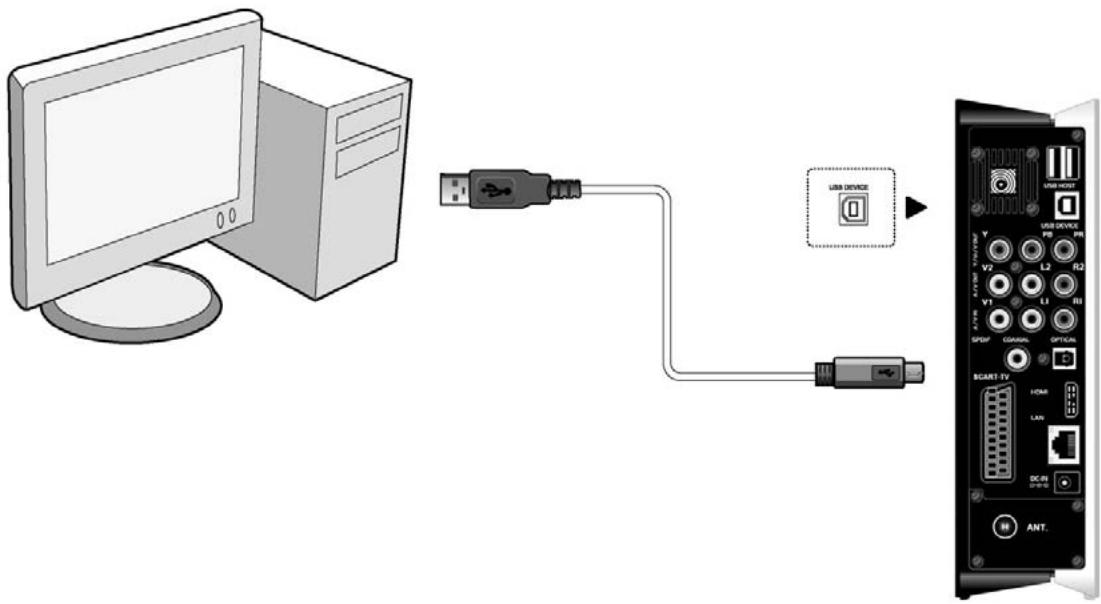
1.4.2 USB Mass Storage Device (like USB stick, MP3, USB HDD etc.)
Connection
(1) Make sure the player is powered on;
(2) Plug in the USB stick or USB HDD etc. to one of the USB host ports of this player.
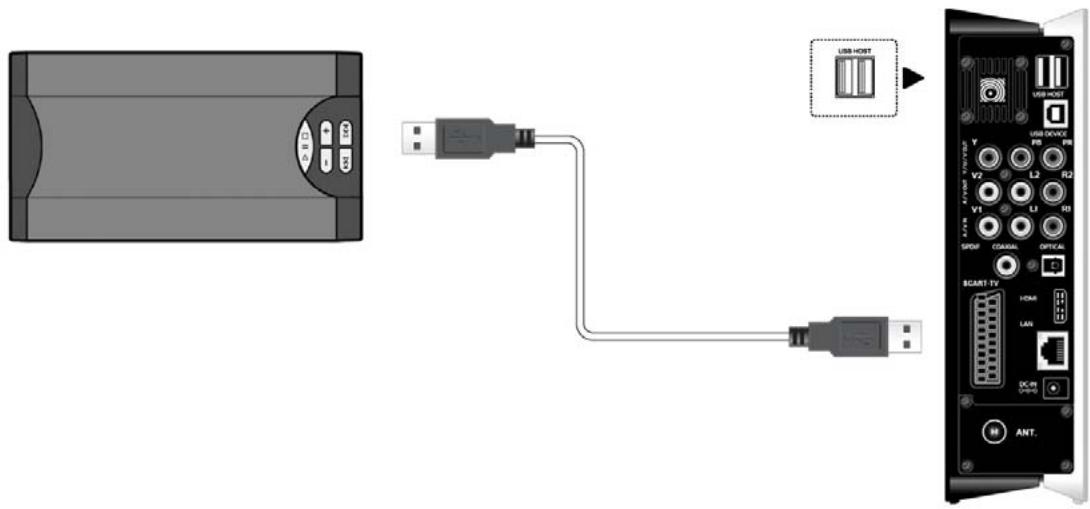
1.4.3 TV connection
1.4.3.1 A/V IN
(1) Follow the picture and plug in the 3 color connector to the player's A/V IN jack;
(2) Follow the picture and plug in the 3 color connector to the A/V OUT jack of the TV/IPTV Set-Top Box (STB).
In this way, you can record TV programs from the TV/IPTV Set-Top Box.
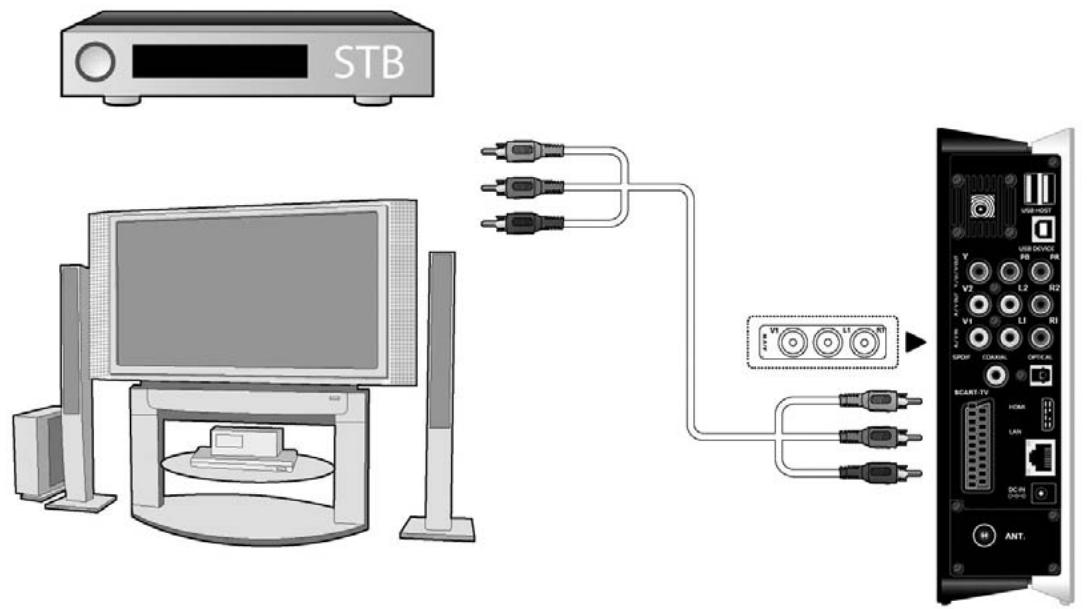
1.4.3.2 A/V OUT
(1) Follow the picture and plug in the 3 color connector to the player's A/V OUT jack;
(2) Follow the picture and plug in the 3 color connector to the TV's A/V IN jack.
In this way, you can enjoy the content in the player on TV or other display devices.
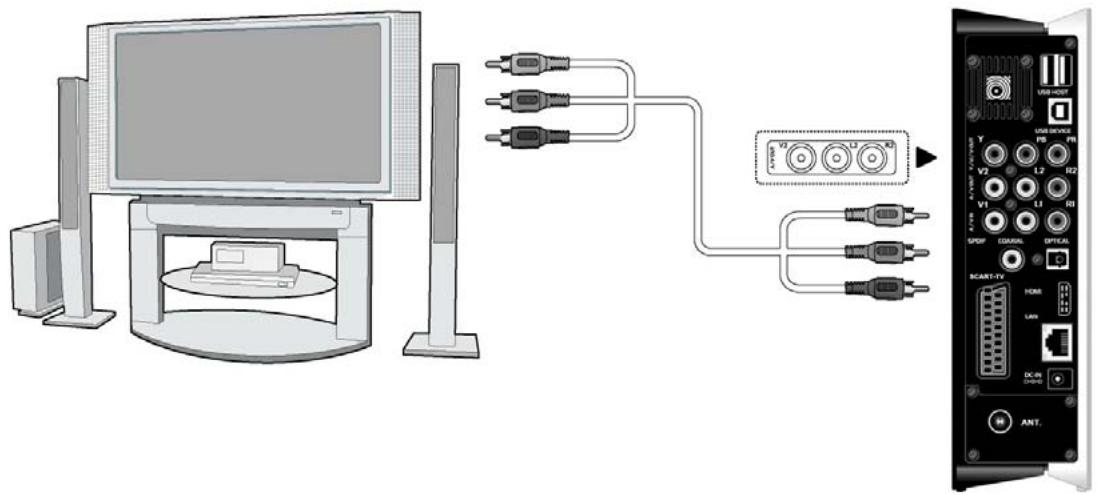
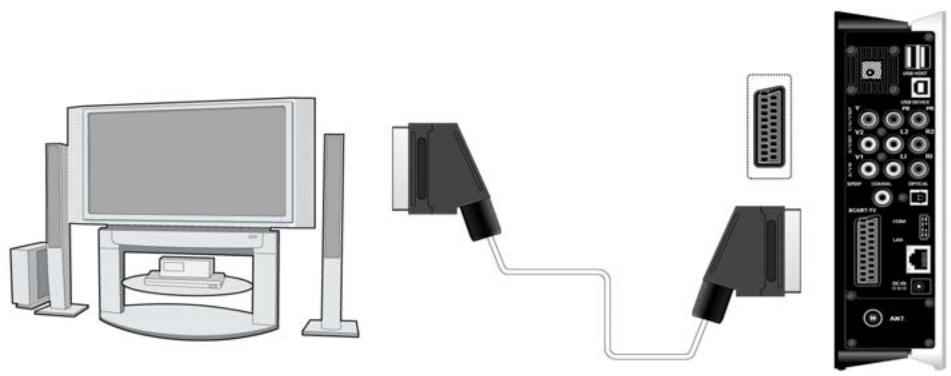
1.4.3.3 SCART OUT
(1) Follow the picture and plug one connector on the SCART cable to the player's SCART socket;
(2) Follow the picture and plug the other connector on the SCART cable to the TV's SCART socket.
1.4.3.4 Y/Pb/Pr Component OUT
(1) Follow the picture and plug in the 3 color connector to the player's Y/Pb/Pr jack;
(2) Follow the picture and plug in the 3 color connector to the TV's Y/Pb/Pr jack.
Audio Connection while using Y/Pb/Pr Video out:
First method: use the audio output from the A/V OUT jack;
Second method: use the audio output from the S/PDIF Coaxial or Optical jack.
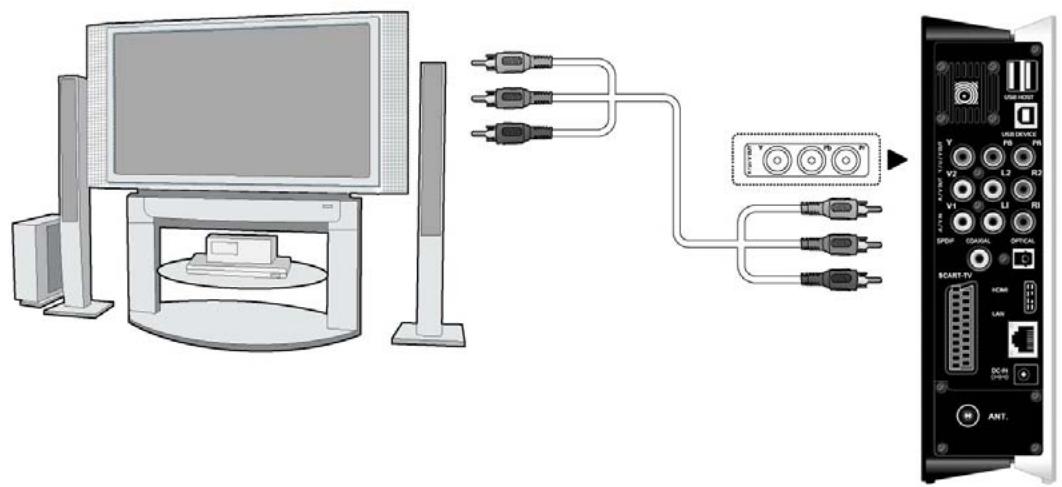
In this way, you can also enjoy videos, music, and photos in the player on TV.
1.4.3.5 HDMI OUT
(1) Follow the picture and plug one connector on your HDMI cable to the player's HDMI jack;
(2) Follow the picture and plug the other connector on your HDMI cable to the TV's HDMI jack.
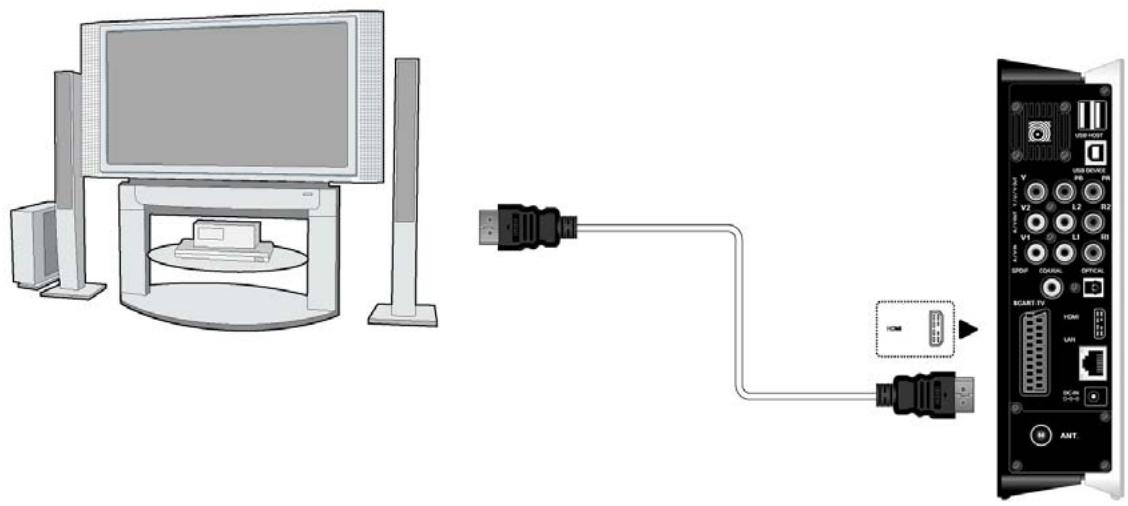
In this way, you can have the highest quality video and audio via a single cable.
1.4.3.6 ANT./RF IN
Follow the picture and plug a TV Aerial or analog TV cable to the ANT. / RF IN socket;
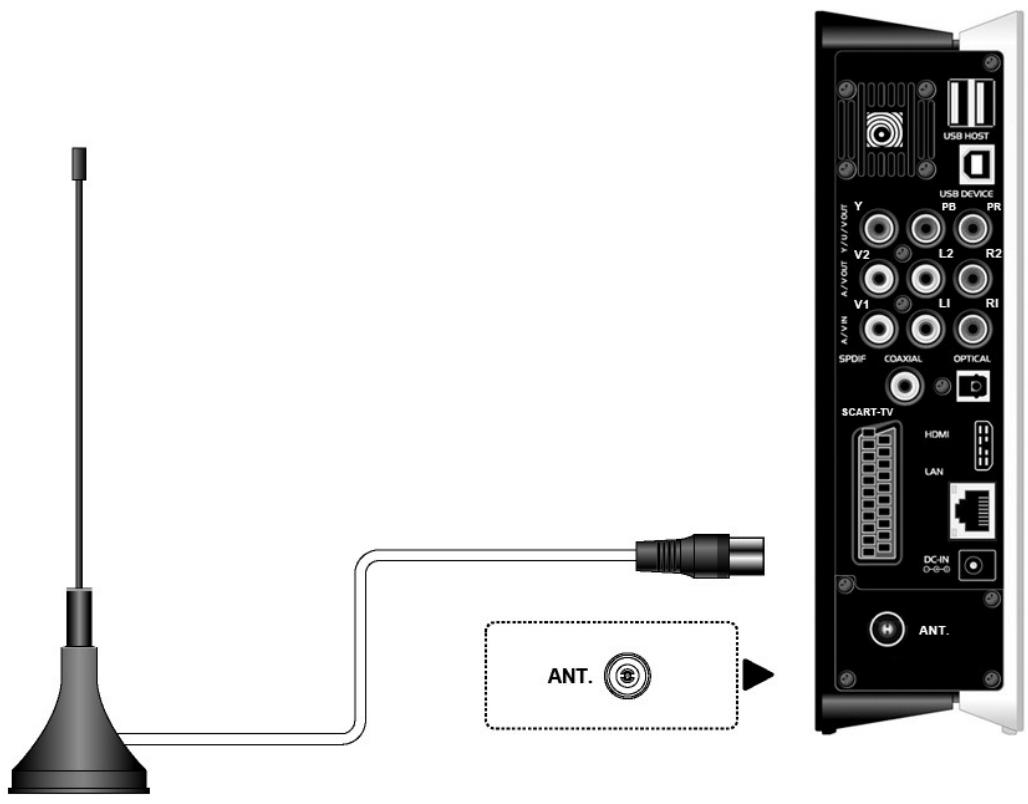
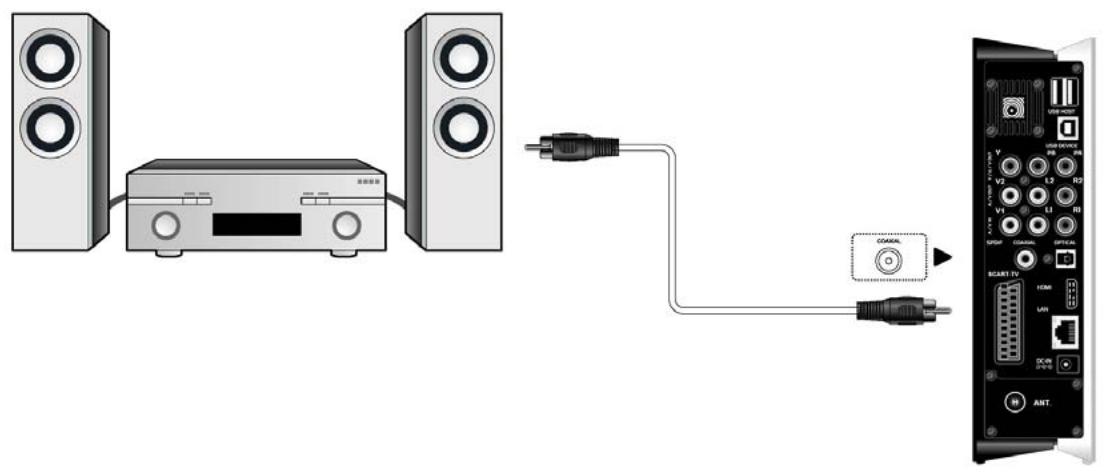
1.4.4 Digital Audio Device connection
(1) Follow the picture and plug in the RCA connector on your coaxial cable to the player's S/PDIF Coaxial jack. Or if you use optical fiber, please plug in the Toslink connector on your optical fiber to the player's S/PDIF Optical jack; (not supplied)
(2) Follow the picture and plug in the other connector on your coaxial cable or optical fiber to the digital audio device.(not supplied)
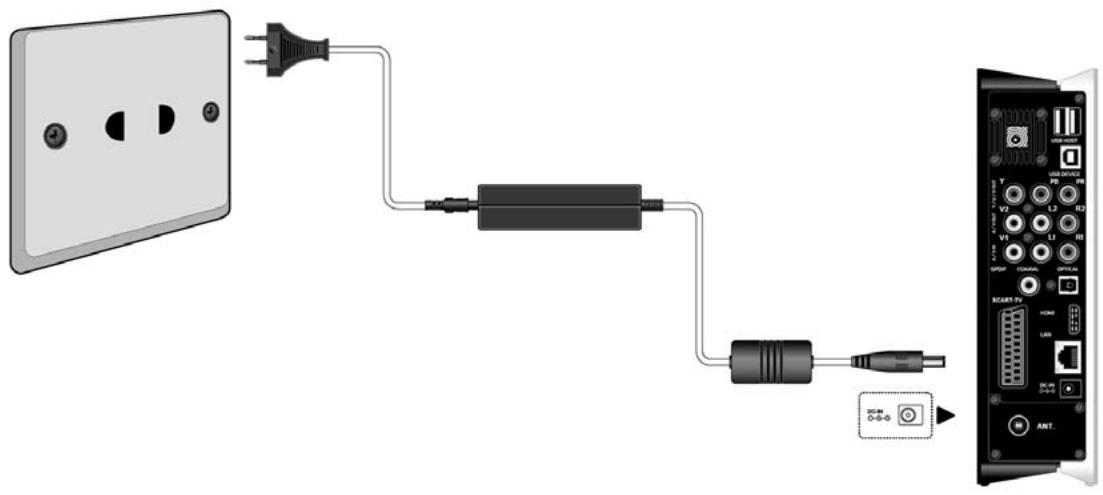
1.4.5 Power connection
(1) Follow the picture and connect the AC adaptor to the player's DC IN jack;
(2) Follow the picture and plug in the AC adaptor to the power outlet.
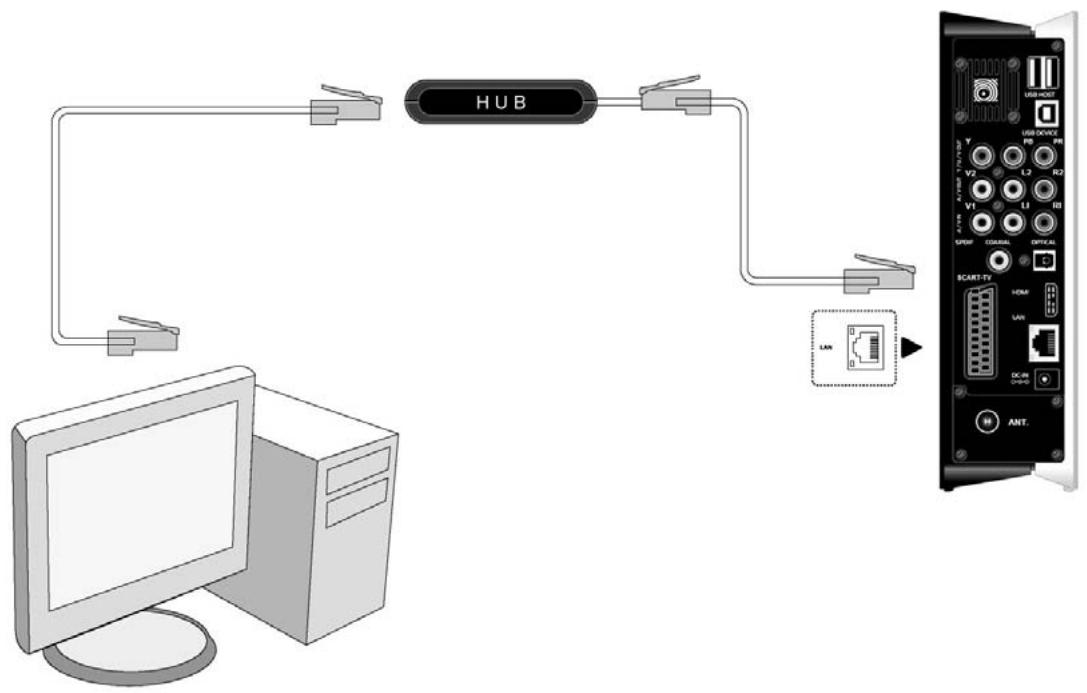
1.4.6 Ethernet connection
To connect to a LAN (Local Area Network) you require a cat5, cat5e or cat6 network cable (not supplied).
(1) Connect one of the crystal plugs on the cable to the player's RJ45 LAN socket;
(2) Connect the other crystal plug on the cable to a RJ45 LAN port on your router, switch, or hub devices.
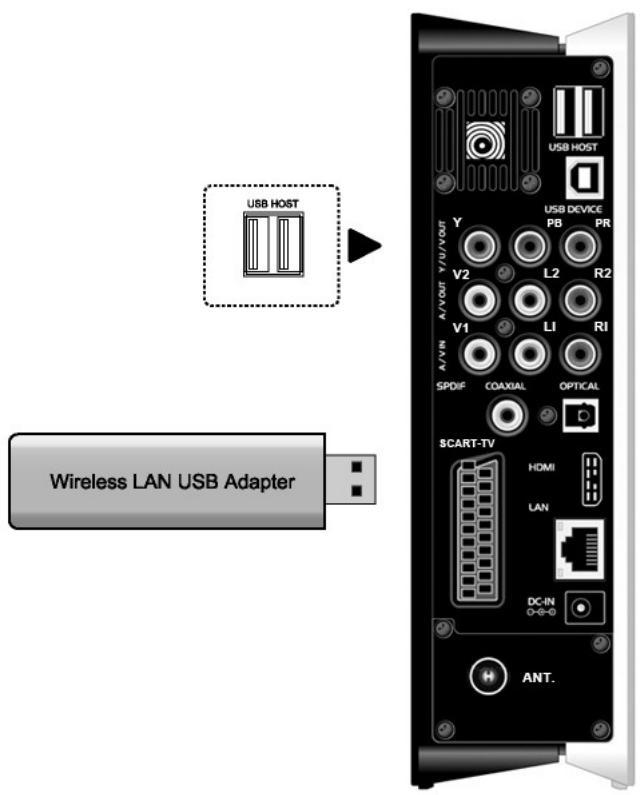
1.4.7 WLAN connection
(1) Make sure the player is powered on;
(2) Plug the Wireless LAN USB Adapter (i.e. Wi-Fi USB Dongle) to the USB HOST port of the player.
1.5 First Time Usage
1.5.1 Firmware Installation
For users who bought the player without a HDD inside, and want to install a SATA HDD, please see 'HDD Format' in '7.7 Changing System Settings' for details.
1.5.2 Remote Control
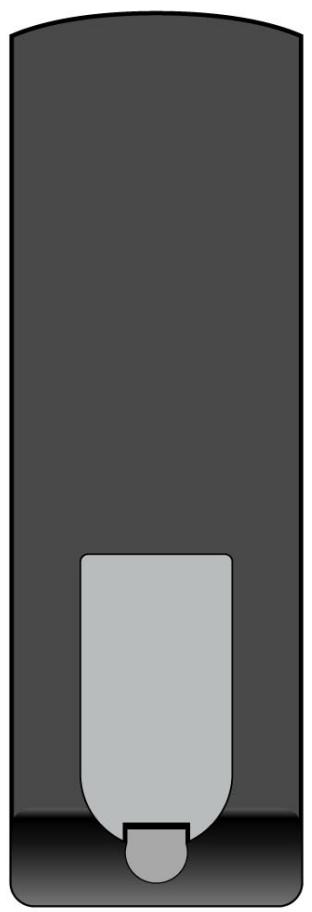
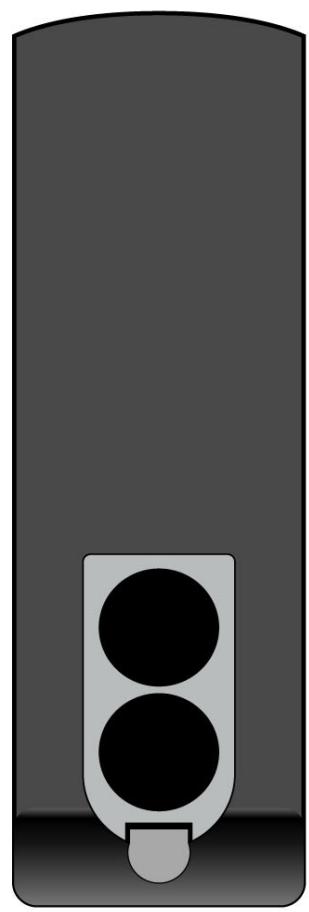
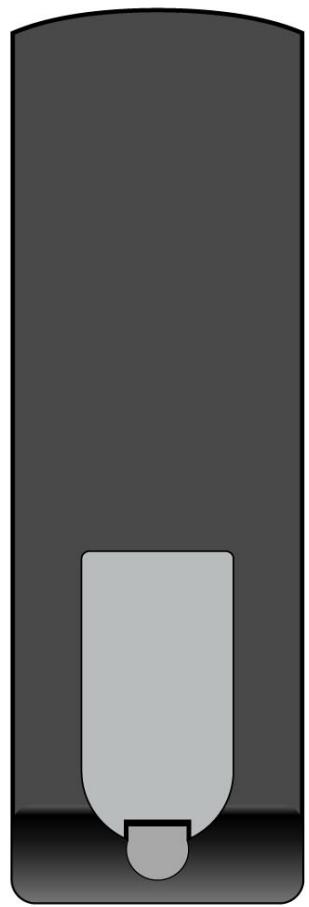
First time usage of Remote control
Install the batteries before using the remote control, installation steps are as the picture shows:



1.5.3 Power on/off, language control
1. Power on
After connecting the power supply cord and turning on the POWER switch, the player will soon enter the main interface, and the POWER indicator on the front panel will turn blue.
2. Power off
When the system is running, press the power / standby button on the front panel or remote
control, the player will enter standby mode.
3. Language control
The system language of this player can be set to English or other languages. In the setup interface is language setup, the selected language will take effect immediately.
2. About the Player
2.1 Remote Control
All procedures in this manual can be carried out using the remote control buttons. See the following for details on each button and its function:
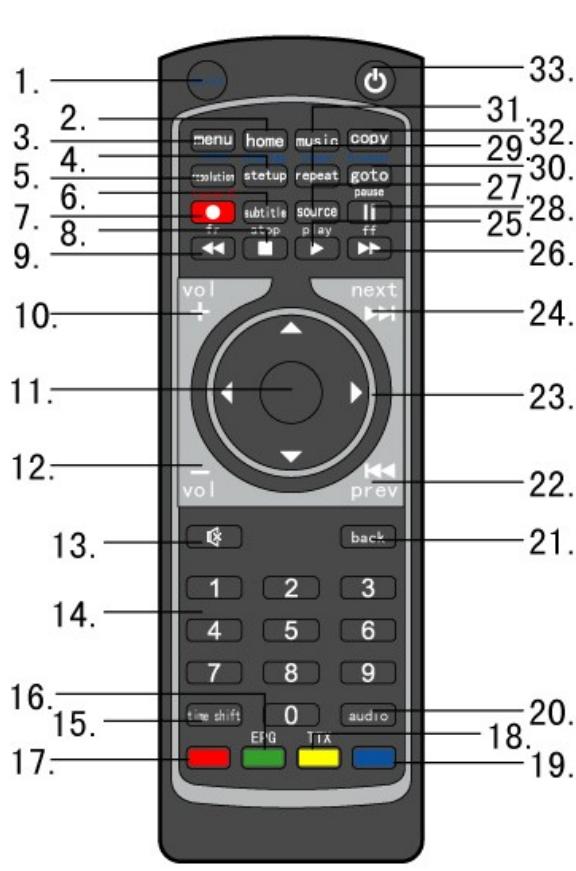
- shift 2. home
- menu 4. setup (display)
- resolution 6. subtitle
- record 8.stop
9.fr 10. vol + - enter 12. vol -
- mute 14. numeric buttons
- time shift 16. EPG
- red 18. TTX
- blue 20. audio
- back 22. prev
- navigational 24. next
buttons
25.play 26. ff
27. source 28. pause
29. repeat (timer) 30. goto (browser)
31. music 32. copy
33. power / standby
| No. | Name | Function |
| 1 | shift | shift button: Press to shift the resolution, setup, repeat, and goto buttons to be zoom, display, timer, and browser. |
| 2 | home | home button:Press to view the main interface. |
| 3 | menu | menu button:Press to activate tools menus:Press in the browser menu to rename and delete files.Press in My_Shortcuts in NET of the browser menu to add shortcuts for network access. |
| 4 | setup (display) | setup button:Press to enter the setup menu displays button:Press to display current status.Press during playback and an on-screen display appears, showing track number and time elapsed/remaining.Press during recording and an on-screen display appears, showing the recording quality setting and time elapsed.Press during live TV and an on-screen display appears, showing the current channel number and time.Press during time shifting to turn the time shifting bar on/off. |
| 5 | resolution (zoom) | resolution button:Press to switch between NTSC, PAL, 480P, 576P, 720P, and 1080Izoom button:Press to zoom in/out the image (photo or video). |
| 6 | subtitle | subtitle button:Press to set subtitle options. |
| 7 | record | record button:Press to begin recording or to resume when recording has been paused.Press repeatedly to set one touch recording (OTR) length (30 MIN. / 60 MIN. / 90 MIN. / 120 MIN. / 180 MIN. / 240 MIN. / Off). |
| 8 | stop | stop button:Press to stop playback. |
| 9 | fr | fast rewind button:Press to fast rewind the current playback.Press repeatedly to select speeds. |
| 10 | vol + | vol + button: |
| Press to increase the volume. | ||
| 11 | enter | enter button: Press to select options in menus. |
| 12 | vol - | vol - button: Press to decrease the volume. |
| 13 | mute | mute button: Press to mute audio output, and press again to resume. |
| 14 | numeric buttons | numeric buttons: Press to enter channel numbers or numeric input when changing settings. |
| 15 | time shift | time shift button: While in the DVB-T / Analog TV or A/V IN mode, press to activate the time shift function, which allows you to pause live TV and resume the program from the point you left it. While paused, the program is recorded to the internal HDD as long as the space is available. Press to activate the time shift function and wait for the play arrow to appear on the screen. Press the pause button and the program will be paused. Press the play button to resume viewing the program. Time shift mode remains active until you press the stop button. |
| 16 | EPG <green> | EPG button: Press to enter the Electronic Program Guide which displays an on-screen list of programs for the coming week when watching Digital Terrestrial TV. |
| 17 | red | red button: Reserved button. No function has been assigned to it yet. |
| 18 | TTX <yellow> | TTX button: Press to open Teletext OSD if it is available in the broadcasted stream of Digital Terrestrial TV. |
| 19 | blue | blue button: Reserved button. No function has been assigned to it yet. |
| 20 | audio | audio button: Press to select an audio track. |
| 21 | back | back button: Press to go back to the previous screen when navigating menus. |
| 22 | prev | previous button: |
| Press to go to the previous file or the previous chapter on a title. | ||
| 23 | navigational buttons | navigational button: Press the arrow buttons to select menu options. |
| 24 | next | next button: Press to go to the next file or the next chapter on a title. |
| 25 | play | play button: Press to begin the playback of a title. |
| 26 | ff | fast forward button: Press to fast forward the current playback. Press repeatedly to select speeds. |
| 27 | source | source button: Reserved button. No function has been assigned to it yet. |
| 28 | pause | pause / step button: Press to pause the current playback. Press again to step to the next frame. Press the play button to resume the playback. |
| 29 | repeat (timer) | repeat 1/all button: Press to set repeat option - Chapter, Title or Off. timer button: Press to enter the timer menu to add, edit and delete recording schedules. See '6.1 Creating a New Schedule' for more details. |
| 30 | goto (browser) | goto button: Press to jump to a specific point on a title. Specify the point using Title, Chapter and Time. browser button: Press to browse music, photo, and movie files on USB, HDD, and NET. |
| 31 | music | music button: Press to start playing music in the playlist. |
| 32 | copy | copy button: Press to enter the file copy menu. |
| 33 | power / standby | power / standby button: Press to enter standby mode or wake up. |
2.2 Front Panel
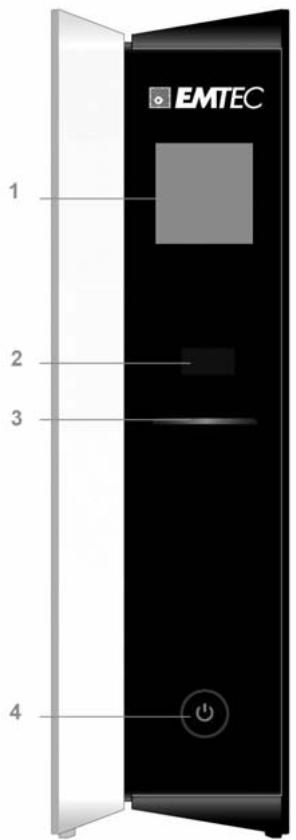
| No. | Name | Function |
| 1 | LCD screen | Menu & icon information will be displayed on the screen. |
| 2 | Infrared receiver window | Receiving IR signals from the remote control. |
| 3 | REC indicator | Indicator (blue) turns on when the system is alive; Indicator (red) turns on when recording starts. |
| 4 | power / standby button | Press to enter standby mode or wake up. |
2.3 Rear Panel
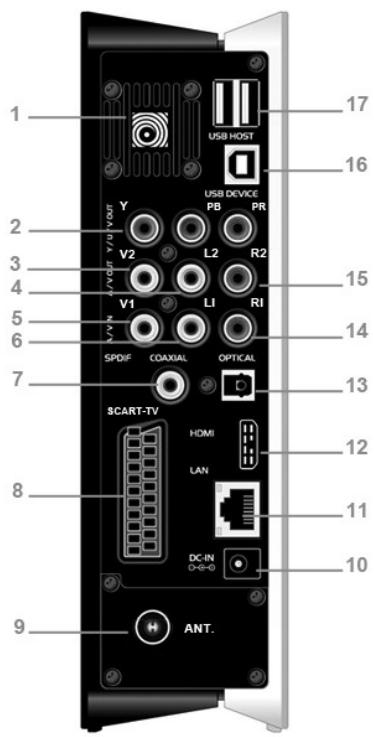
- Air Flow hole
- V2: Video OUT jack
- V1: Video IN jack
- S/PDIF COAXIAL jack
- ANT. / RF IN socket
- RJ45 LAN socket
- S/PDIF OPTICAL jack
- R2: Audio OUT jack (Right Channel)
-
USB HOST port x 2
-
Y/Pb/Pr OUT jack
- L2: Audio OUT jack (Left Channel)
- L1: Audio IN jack (Left Channel)
- SCART - TV socket
- DC-IN jack
- HDMI jack
- R1: Audio IN jack (Right Channel)
- USB DEVICE port
3. Getting Started
Power on the system, and after a few seconds, the system will enter the main interface. To return to this menu, you can also press the home button on the remote control.
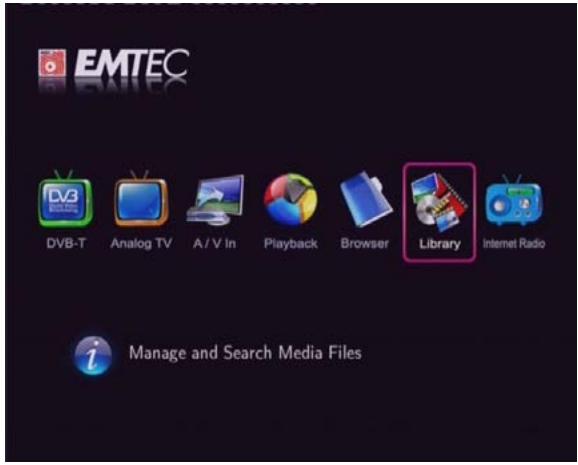
3.1 Selecting DVB-T TV
In this menu, you can watch and record Digital Terrestrial TV programs, or have the time shift function.
Select the DVB-T icon on the main interface to enter this menu.
3.2 Selecting Analog TV
In this menu, you can watch and record Analog TV programs, or have the time shift function.
Select the Analog TV icon on the main interface to enter this menu.
3.3 Selecting A/V In - Signal from the A/V IN jack
In this menu, you can watch and record audio-visual signal from the A/V IN jack on the rear panel of the unit, or have the time shift function.
Select the A/V In icon on the main interface to enter this menu.
3.4 SelectingPlayback-PlaybackandEditRecordedTitles
A clip recorded on HDD or USB device is called a Title.
In this menu, you can playback the recorded video or TV programs; you can also Merge/Split/Delete/Edit all the recorded titles.
Select the Playback icon on the main interface to access the title list menu.
3.5 Selecting Browser - Playback Multimedia Files
You can browse all the multimedia (Videos/Music/Photos) files on the internal HDD, USB or Network, and playback them on TV.
Press the browser button on the remote control or select the Browser icon on the main interface to browse movie, photo, and music files stored either on a HDD, USB device, or Network.
3.6 Selecting Media Library
In this menu, you can search multimedia files stored on the internal HDD.
Select the Library icon on the main interface to enter this menu.
3.7 Selecting Internet Radio
In this menu, you can listen to the SHOUTcast free radio programs on the Internet.
Select the Internet Radio icon on the main interface to enter this menu.
4. Watching Analog & DVB-T TV programs (only S800)
Equipped with an internal Hybrid TV Tuner, this player integrates Analog and Digital Terrestrial TV receiving. Please refer to '7.1 Changing DVB-T TV settings' and '7.2 Changing Analog TV settings' in order to make correct settings before reading the following chapters.
4.1 Watching Analog TV programs
To enter the Analog TV mode, select the Analog TV icon on the main interface.
The following are some functional buttons on the remote control available when watching Analog TV programs.
| Name | Function |
| up / down | Press to switch channels. (Channels cannot be switched in the recording mode.) |
| prev / next | |
| numeric buttons | Press to input channel numbers. Press the enter button to confirm. |
| record | Press to start recording the current TV program. |
| time shift | Press to activate the time shift function. |
| timer | Press to edit scheduled recordings. |
| zoom | Press to zoom out the image. |
4.2 Watching DVB-T TV programs
To enter the DVB-T TV mode, select the DVB-T icon on the main interface.
The following are some functional buttons on the remote control available when watching Digital TV programs.
| Name | Function |
| enter | Press to view the program list menu. |
| up / down | Press to switch channels. (Channels cannot be switched in the recording mode.) |
| prev / next | |
| numeric buttons | Press to input channel numbers. Press the enter button to confirm. |
| goto | Press to switch between the last two viewed channels. |
| record | Press to start recording the current TV program. |
| time shift | Press to activate the time shift function. |
| timer | Press to edit scheduled recordings. |
| subtitle | Press to activate the subtitle list menu if available. |
| EPG | Press to activate the EPG menu if available. |
| TTX | Press to activate the Teletext menu if available. |
| zoom | Press to zoom out the image. |
4.2.1 Program List Menu
Press the enter button when watching DVB-T TV programs, and the program list menu where you can see the program number and name will be displayed.
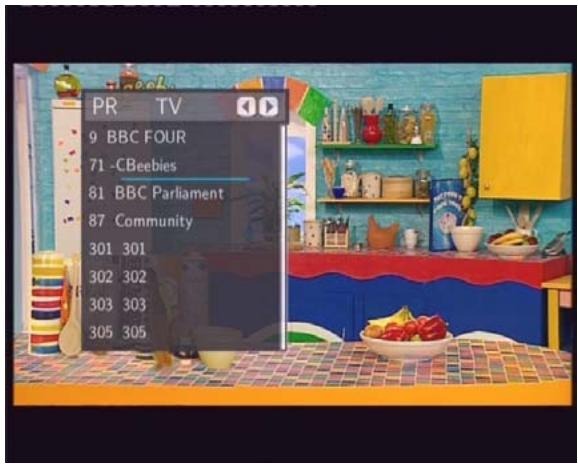
Press the left / right button to select from TV and Radio. Press the prev / next button to page up / down. Press the up / down button to select channels, and press the enter button to confirm.
4.2.2 Info Bar
While switching channels by the up / down button, an info bar will be displayed to show the channel information.
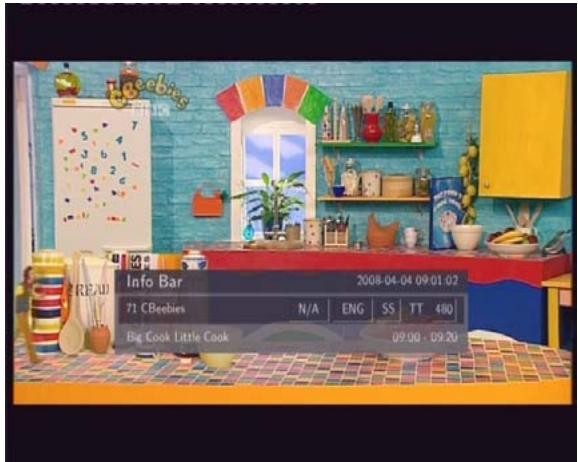
There're 4 strings displayed on the bar. Taking the info bar in the above photo for example:
N/A - Stands for TV rating;
ENG - Stands for the voice language;
SS - Stands for subtitle;
TT - Stands for Teletext;
480 - Stands for resolution (SD - Standard Definition, HD - High Definition).
When the string looks concave, the option will be available.
4.2.3 Electronic Programming Guide
Press the EPG button when watching DVB-T TV programs, the Electronic Programming Guide will be displayed.
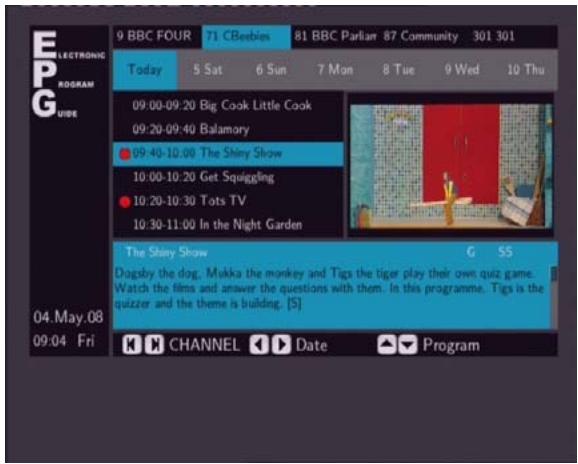
Press the prev / next button to change channels. Press the left / right button to change date. Press the up / down button to change program. Press the timer button to add / delete scheduled recording.
4.2.4 Teletext Menu
If the broadcasted stream supports Teletext, press the TTX button to enter the Teletext menu.
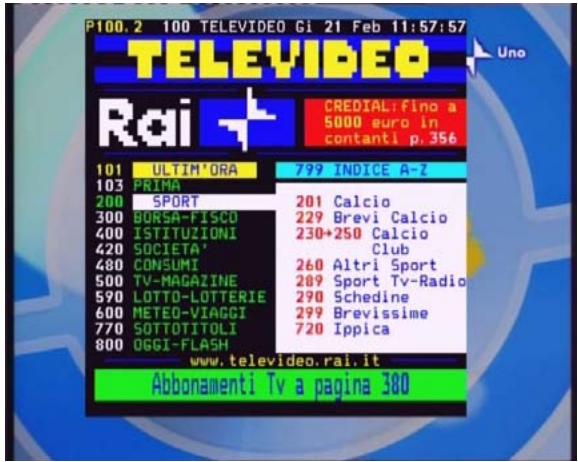
Press the navigational and numeric buttons to view the content in the Teletext menu.
4.2.5 Subtitle List Menu
Press the subtitle button when watching DVB-T TV programs, the Subtitle List menu will be displayed. Press the left / right button to switch between Subtitle List and TTX Subtitle List
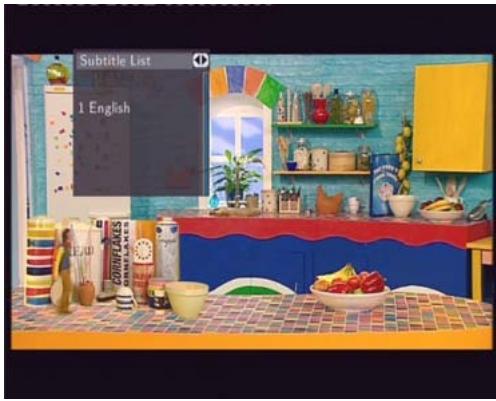
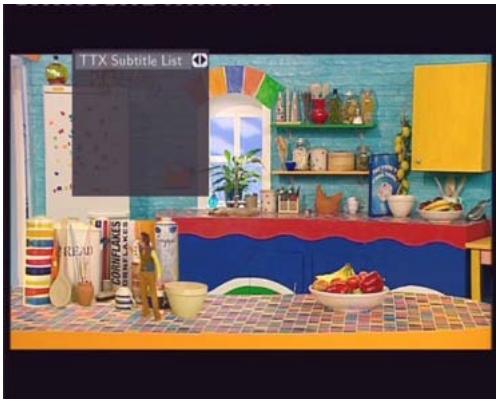
Press the up / down button to select the subtitle, and press the enter button to confirm.
5. The Title List Menu for Recorded Videos
The Title List menu allows you to play and edit all saved titles. To enter the menu, select the Playback icon on the main interface.
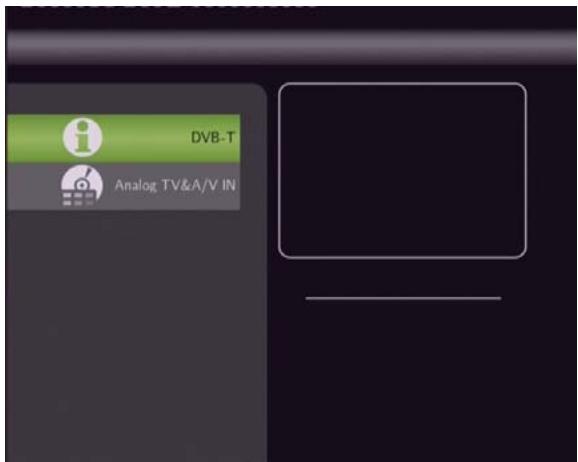
Press the up / down button on the remote control to select from DVB-T and Analog TV &
A/V IN to view and edit recorded DVB-T or Analog TV programs.
5.1 Title List Menu
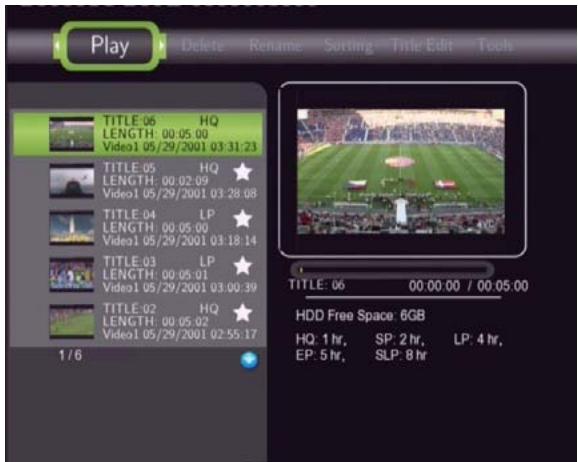
| Number | Function | Description |
| 1 | Menu Bar | Press the left / right button to scroll through the menu. Here you can Play / Delete / Rename / Sort / Edit a recorded title. |
| 2 | Title Lists | Here lists all recorded titles. Here you can see thumbnail / length / quality / recorded channel / recorded date & time of a title. A ★ sign shows this recorded title has not been watched. A ● sign shows this title is being recorded now. |
| 3 | Information | Here you can see a playback progress bar of a title, the remained free space of HDD, and remained recording time of each quality. |
| 4 | Preview | Shows the preview window. |
5.2 Playing Back Titles
To play a recorded title, do the following:
- Press the left / right button on the remote control to select the Play tab from the menu bar.
- Press the up / down button on the remote control to select the title you wish to play.
- Press the enter button on the remote control to play the file.
- Press the stop or the back button on the remote control to stop playback and return to the Title List menu screen.
5.3 Deleting Titles
To delete a title, do the following:
- Press the left / right button on the remote control to select the Delete tab from the menu bar.
- Press the up / down button on the remote control to select the title you wish to delete.
- Press the enter button to confirm and delete the file.
- A confirmation message appears. Press the up / down button and select OK.
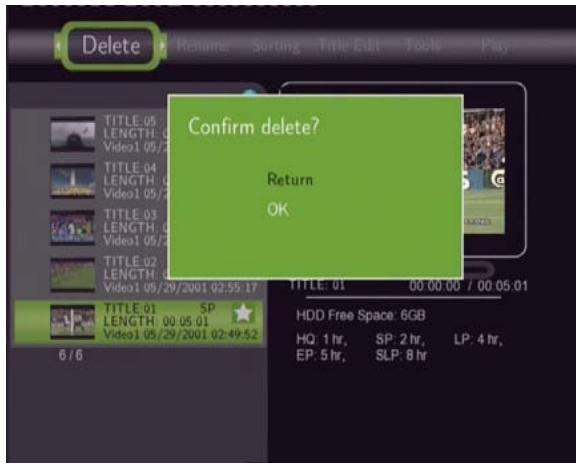
- Press the enter button to delete the selected file. To cancel delete, select Return.
5.4 Renaming Titles
To rename a title, do the following:
- Press the left / right button on the remote control to select the Rename tab from the menu bar.
- Press the up / down button on the remote control to select the file you wish to rename.
- Press the enter button on the remote control. The name entry screen appears.
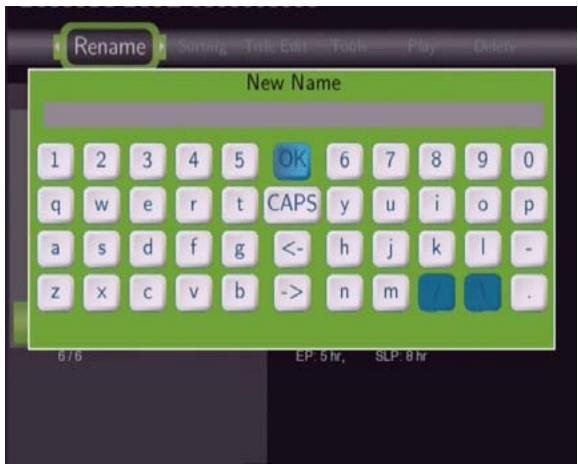
- Press the navigation buttons to select letters and numbers. Select CAPS to toggle between uppercase and lowercase letters. Press <- to delete a letter. Press -> to insert a space. Press the enter button to input each letter or number.
- Once you have entered the new name, select OK and press the enter button to confirm all changes.
If you want to cancel the renaming during the process, press the back button.
5.5 Sorting Files
Press the left / right button on the remote control to select the Sorting tab from the menu bar.
Press the enter button, and the menu appears.
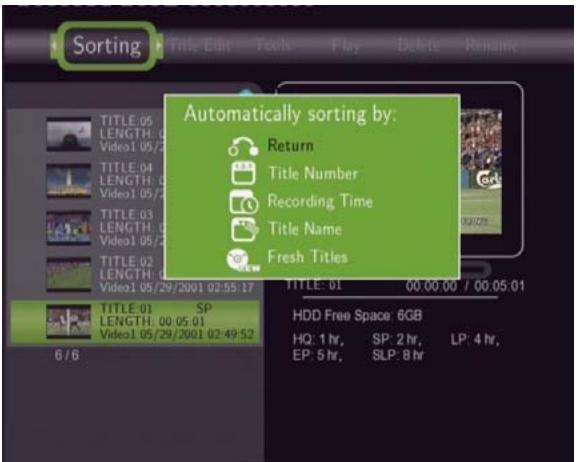
| Return | Select to return to the main screen. | |
| Title Number | Select to sort all files according to title numbers. | |
| Recording Time | Select to sort all files according to the length of the recordings | |
| Title Name | Select to sort all files alphabetically, according to title name. | |
| Fresh Titles | Select to sort all files according to freshness (i.e. the most recent recordings), listing the most recent recording first. |
5.6 Title Edit Menu
Press the left / right button on the remote control to select the Title Edit tab from the menu bar. Press the enter button, and the menu appears.
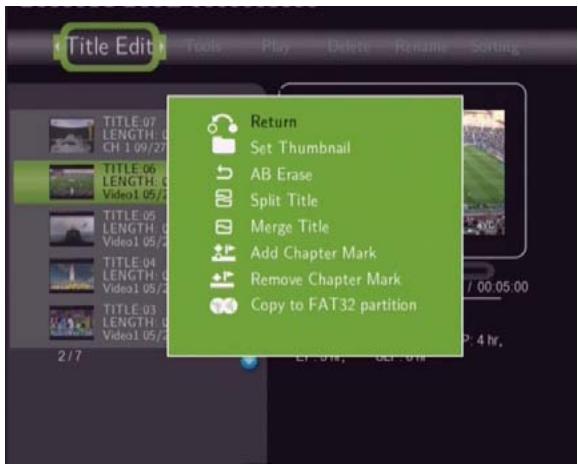
Menu only available with the Analog & AV IN TV, not with the DVB-T
| Return | Select to return to the main screen. | |
| Set Thumbnail | Select to change a thumbnail of the selected video. Press the up / down button on the remote control to select Set Thumbnail, an editing screen appears. You can press the ff / fr button to fast forward or fast rewind when searching a proper point. When you reach the point at which you wish to insert a thumbnail, press the left / right button to select CONFIRM and press the enter button. | |
| AB Erase | Delete a specified clip in a title. | |
| Select SET A and press the enter button to mark the start for the section to be deleted. Select SET B and press the enter button to mark the end of the section to be deleted. Select CONFIRM and press the enter button to delete the section. | ||
| Split Title | Select a title and divide it into sections.When you reach the point at which you wish to split the track, press the enter button to confirm.CANCEL CONFIRM | |
| Merge Title | Select more than two titles and combine them into one title. A confirmation message appears. Select CONFIRM to merge the files.Title Edit Merge Title TITLE:02, TITLE:03CANCEL CONFIRM 02:03 02 4 hr. | |
| Add Chapter Mark | Add a chapter mark to the selected file.A chapter mark is a marker inserted into the title. You can jump between marked sections by pressing the | |
| prev / next button on the remote control. An editing screen appears. When you reach the point at which you wish to add the mark, press the enter button to confirm. Return AND | ||
| Remove Chapter Mark | Remove a chapter mark that you have inserted. An editing screen appears. Use the prev / next button to select the mark you wish to remove and press the enter button to delete. | |
| Copy to FAT32 partition | Copy function. In the Title List Menu, press the up / down button on the remote control to select which title you want to copy from the UDF partition to the FAT32 partition. |
5.7 Tools
Press the left / right button on the remote control to select the Title Edit tab from the menu bar. Press the enter button and the menu appears.
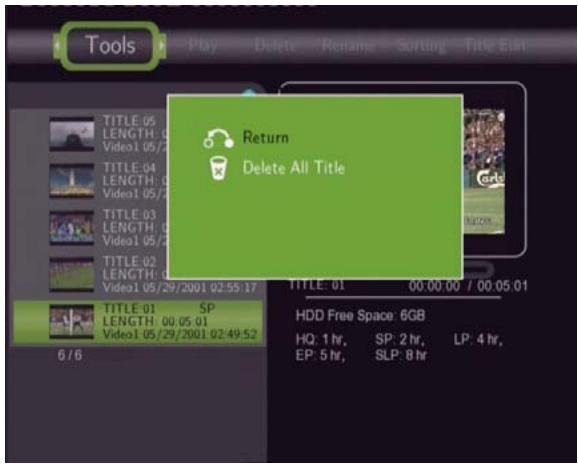
| Return | Select to return to the main screen. | |
| Delete All Title | Select to delete all titles. |
5.8 Saving Your Recorded Titles
All the recorded titles are stored temporarily in a recording disc partition (UDF format) which cannot be identified by personal computers. If you want to share the recorded titles on your computer, please copy the titles from the recording disc to the multimedia disc which is in FAT32 format first. See Copy to FAT32 partition in '5.6 Title Edit Menu' for more details.
6. Timer Record Menu
The Timer Record menu allows you to create, edit and delete recording schedules and view all schedule status and history. Press the timer button on the remote control to enter the menu.
6.1 Create a New Schedule
Press the left / right button on the remote control to select the Edit tab from the menu bar. Select Add a New Schedule and press the enter button. The schedule setting screen appears.
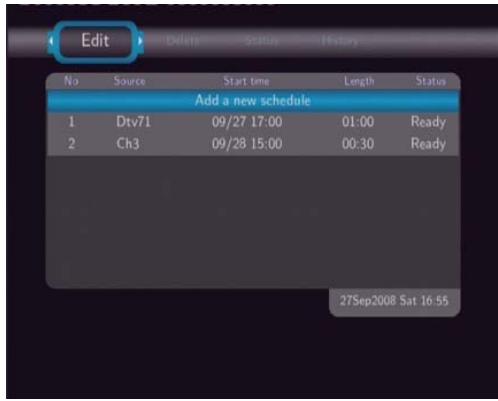
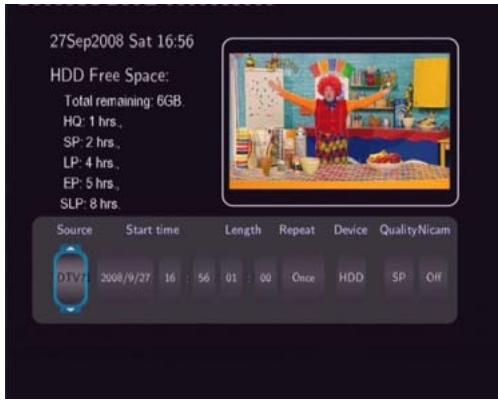
Use the left / right button on the remote control to move between fields and press the up / down button to adjust each setting.
| Source | Select the video source or TV channels for the recording. |
| Start Time | Enter the date and time of the recording. |
| Length | Enter the length of the recording |
| Repeat | Select how often you want the schedule to record. Choose from Once, Everyday, Mon-Fri, Mon-Sat or for an individual day of the week. |
| Quality | Select the recording quality. Choose from HQ, SLP, EP, LP and SP. The higher the quality, the more space required on the hard drive. See HDD Free Space on the left of the screen for details of how long you can record for using each setting. |
| Preview | This small preview window will show the current program of the selected channel. |
6.2 Editing Schedule
Press the left / right button on the remote control to select the Edit tab from the menu bar.
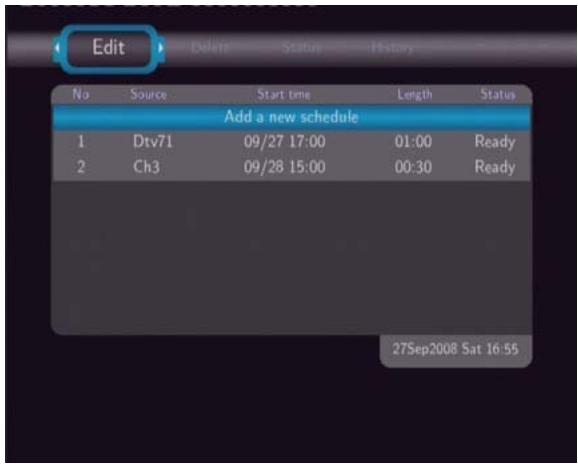
Select the schedule you want to edit from the list and press the enter button. The schedule setting screen appears. Modify the schedule as described in '6.1 Creating a New Schedule'.
6.3 Deleting Schedules
Press the left / right button on the remote control to select the Delete tab from the menu bar.
Select the schedule you want to delete and press the enter button. A confirmation message appears.
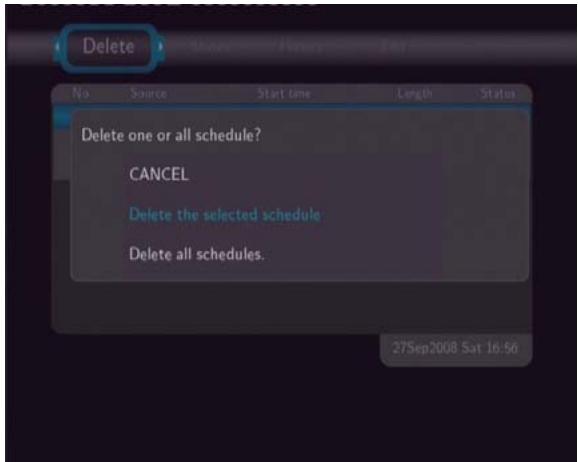
Select CANCEL, Delete the selected schedule, or Delete all schedules. Press the enter button to confirm.
6.4 Viewing Schedule Status
Press the left / right button on the remote control to select the Status tab from the menu bar.
The schedule list is displayed. Select a schedule and press the enter button.
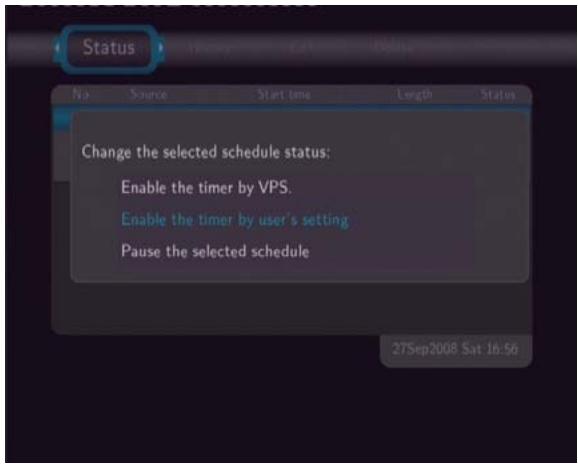
Select Enable the timer by VPS, Enable the timer by user's setting or Pause the selected schedule. Press the enter button to confirm.
6.5 Viewing Recording History
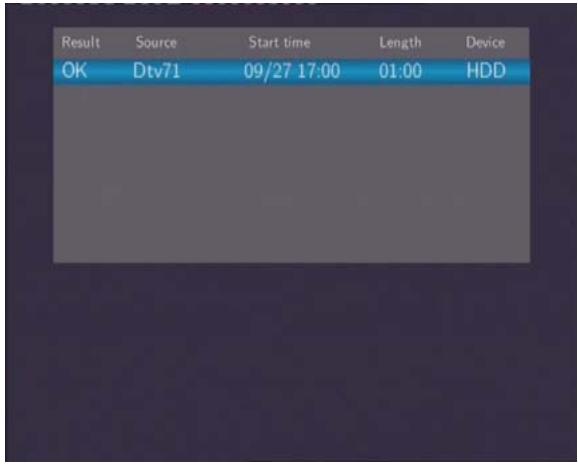
Press the left / right button on the remote control to select the History tab from the menu bar.
Here you can view a complete history of all recordings that were set.
7. Setup Menu
The Setup Menu allows you to configure DVB-T / Analog TV, video, audio, record, network and system settings. To enter the menu, press the setup button on the remote control.
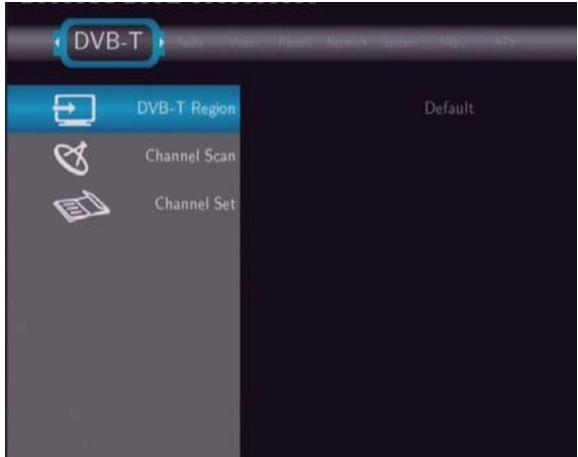
7.1 Changing DVB-T TV settings
Press the left / right button on the remote control to select the DVB-T tab from the menu bar.
DVB-T Region
Select to set the region for Digital Terrestrial TV.
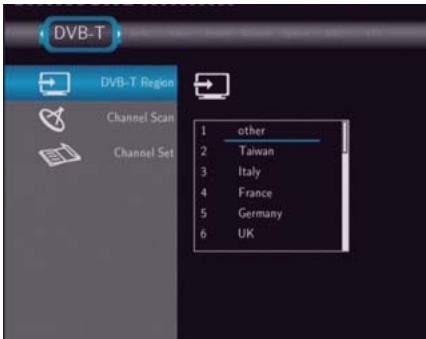
Press the up / down button to select, and the enter button to confirm.
Channel Scan
Select to scan for available Digital Terrestrial TV channels.
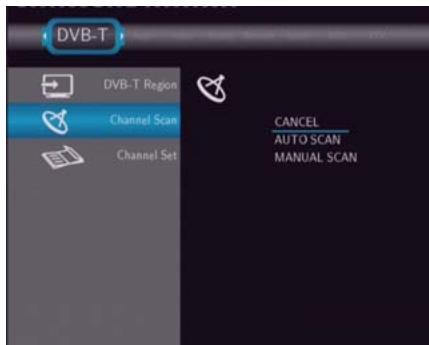
Press the up / down button to select from AUTO SCAN and MANUAL SCAN, and press the enter button to confirm.
AUTO SCAN
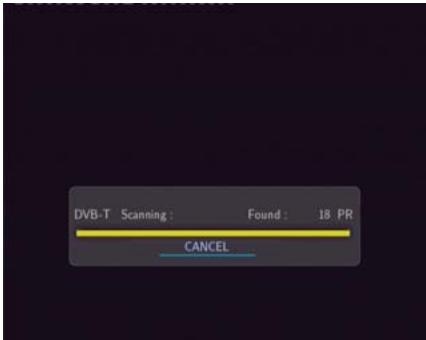
In AUTO SCAN mode, the system will automatically scan for available DVB-T TV channels.
MANUAL SCAN
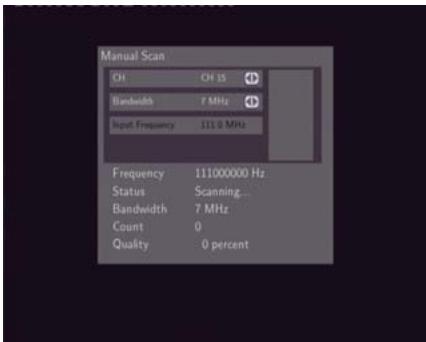
In MANUAL SCAN mode, you can select the CH name, Bandwidth, and Input Frequency. Use the navigational and numerical buttons on the remote control to select or input. Press the enter button to confirm.
Channel Set
Select to edit channel information.
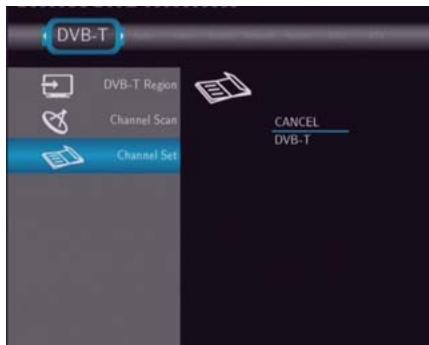
Press the up / down button to select DVB-T, and press the enter button to confirm.
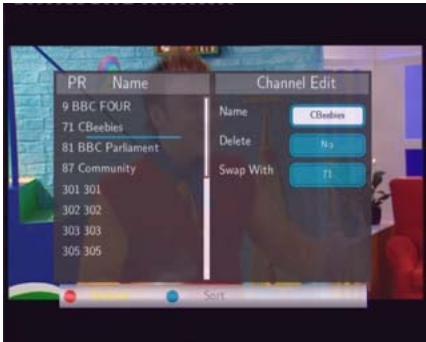
In this menu, you can edit the Name, and sequence for the DVB-T TV channels. Use the navigational buttons to select and modify the settings, and press the enter button to confirm. You can also press the red button to select Default, and press the blue button to select Sort.
7.2 Changing Analog TV settings
Press the left / right button on the remote control to select the ATV tab from the menu bar.
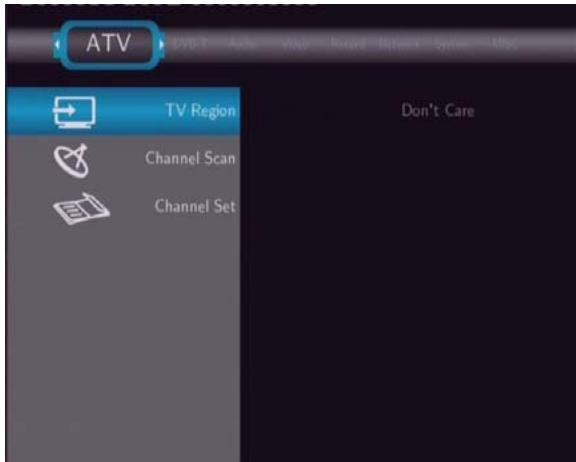
| Analog TV Region | Select to set the region for Analog TV. |
| Press the up / down button to select, and the enter button to confirm. | |
| Channel Scan | Select to scan for available Analog TV channels. |
| Press the up / down button to select from AUTO SCAN, and press the enter button to confirm. | |
| In this menu, the system will automatically scan for available Analog TV channels. |
Channel Set
Select to edit channel information.
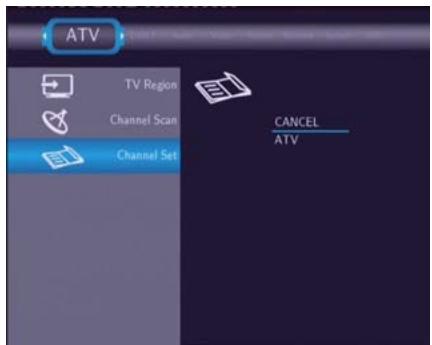
Press the up / down button to select Analog TV.
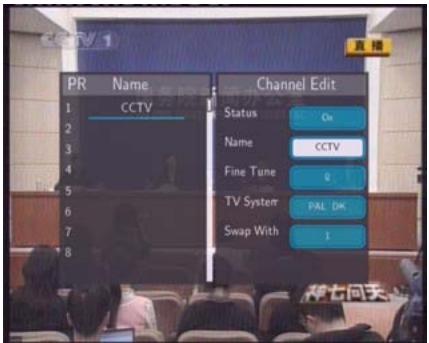
In this menu, you can edit the Status, Name, Fine Tune, TV System, and sequence for the Analog TV channels. Use the navigational buttons to select and modify the settings, and press the enter button to confirm.
7.3 Changing Video Settings
Press the left / right button on the remote control to select the Video tab from the menu bar.
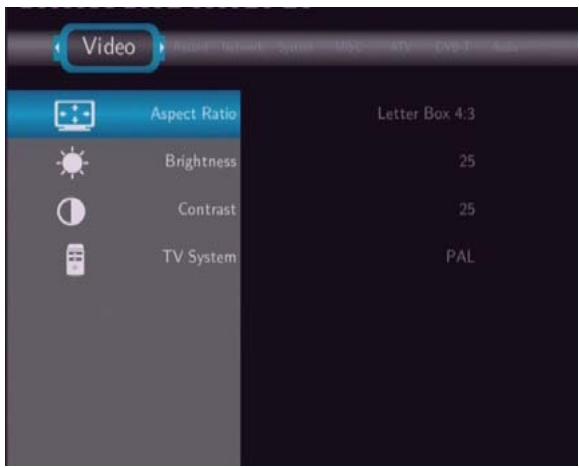
Aspect Ratio
Select to set aspect ratio.
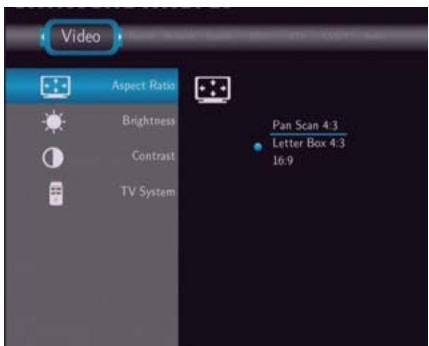
Press the up / down button to select from Pan Scan 4:3, Letter Box
4:3, or 16:9. Press the enter button to confirm.
Pan Scan 4:3: Display a wide picture on the entire screen and cuts off the redundant portions. Select when a standard 4:3 TV is connected.
Letter Box 4:3: Display a wide picture with two black borders on the top and bottom of 4:3 screen. Select when a standard 4:3 TV is connected.
16:9: Compress the image to convert the whole image. Select when a 16:9 TV is connected.
| Brightness | Select to set brightness levels. |
| Press the up / down button to adjust brightness. The new setting is previewed on screen. Press the enter button to confirm. | |
| Contrast | Select to set contrast levels. |
| Press the up / down button to adjust contrast. The new setting is previewed on screen. Press the enter button to confirm. | |
| TV System | Select to adjust TV system. |
| Press the up / down button to set the TV system, depending on your viewing preferences. Press the enter button to confirm. |
7.4 Changing Audio Settings
Press the left / right button on the remote control to select the Audio tab from the menu bar.
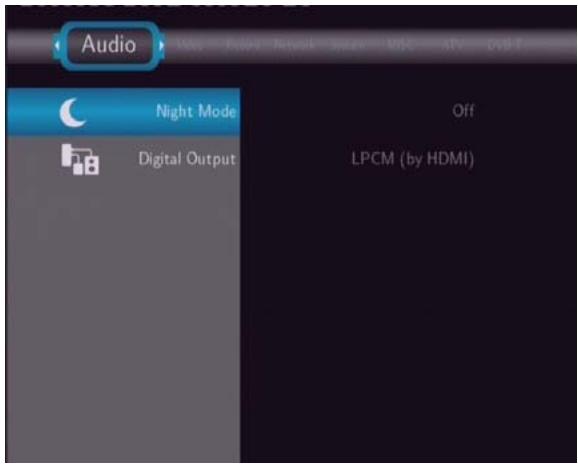
Night Mode
Select to set night mode.
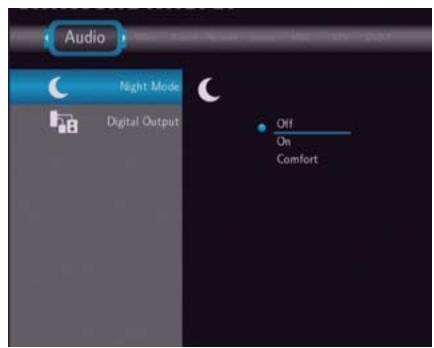
Press the up / down button to select from Off, On, and Comfort. Press the enter button to confirm.
Digital Output
Select to set Digital Output (S/PDIF) mode.
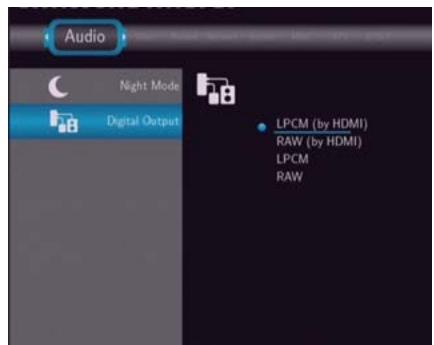
Press the up / down button to select from RAW, and LPCM. Press the enter button to confirm.
7.5 Changing Record Settings
Press the left / right button on the remote control to select the Record tab from the menu bar.
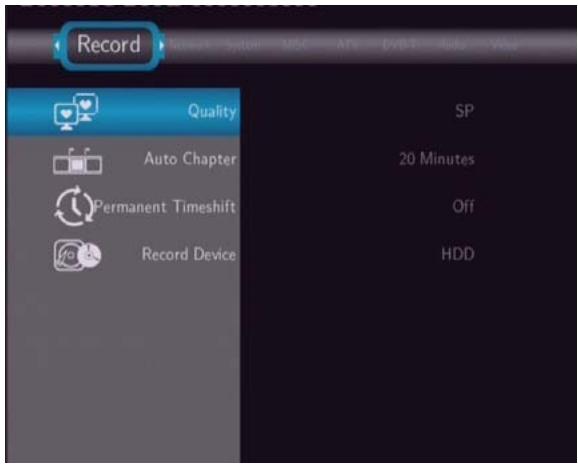
Quality
Select to set the default recording quality setting.
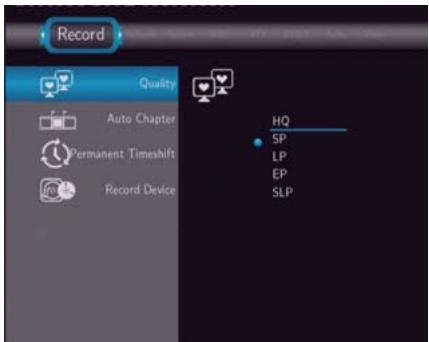
Press the up / down button to select the quality setting you require.
The highest quality setting is HQ which requires the most storage space. The other settings reduce recording quality sequentially but also require less storage space. Press the enter button to confirm.
| Auto Chapter | Select to add chapter marks automatically at set intervals. |
| Press the up / down button to select the interval you require. An automatic chapter mark will be added at each interval, allowing you browse titles easily after recording. Press the enter button to confirm. | |
| Permanent Timeshift | Select to set Time Shift mode. |
| Press the up / down button to select from On and Off. Press the enter button to confirm. If On, the time shift will start automatically while in Video In mode. | |
| Record Device | Select to set device to restore the recorded files. |
Press the up / down button to select from HDD and USB. Press the enter button to confirm.
7.6 Changing Network Settings
Press the left / right button on the remote control to select the Network tab from the menu bar.
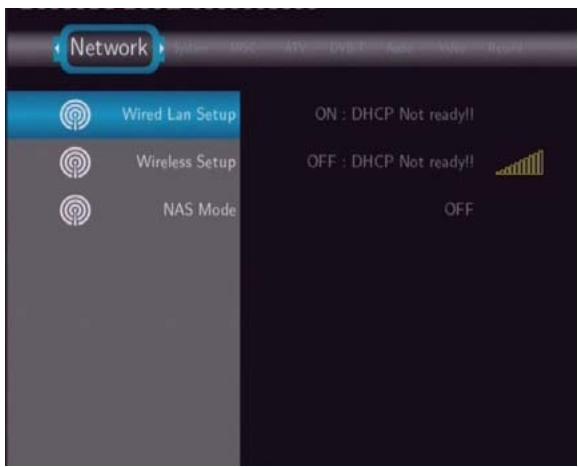
Wired LAN Setup
Select to set the Ethernet settings.
Before using the network functions, please check following items:
1) Connect the player to network first;
2) Please enable NetBIOS of TCP/IP on computer;
3) Please turn off your PC's firewall;
4) Please enable your PC's 'Guest' account;
5) Please share the folders which you wish to browse on your PC, and make sure that 'Everyone' or 'Guest' has the right to access.
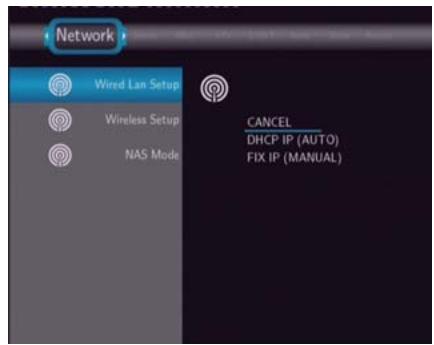
Press the up / down button to select DHCP (AUTO) or FIXED IP (MANUAL). Press the enter button to confirm.
DHCP (AUTO)
Set the IP address by auto.
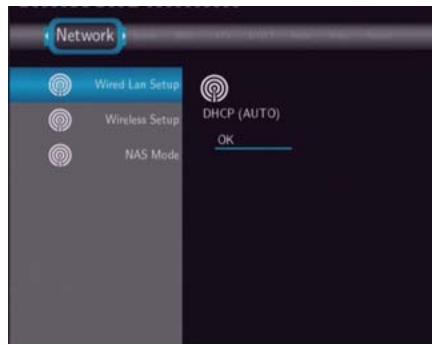
Press the enter button to confirm.
FIX IP (MANUAL)
Using Fixed IP, it is required to enter the followings: IP Address, Subnet Mask, and Default Gateway. For further assistance to the
| Wireless Setup | Please refer to the user's guide to wireless function in the package of EMTEC Wi200 USB adapter for more details about these settings. |
| NAS Mode | Select to turn the NAS mode on / off. Network Wired Lan Setup Wireless Setup NAS Mode Off On Press the up / down button to select from Off, and On. Press the enter button to confirm. |
7.7 Changing System Settings
Press the left / right button on the remote control to select the System tab from the menu.
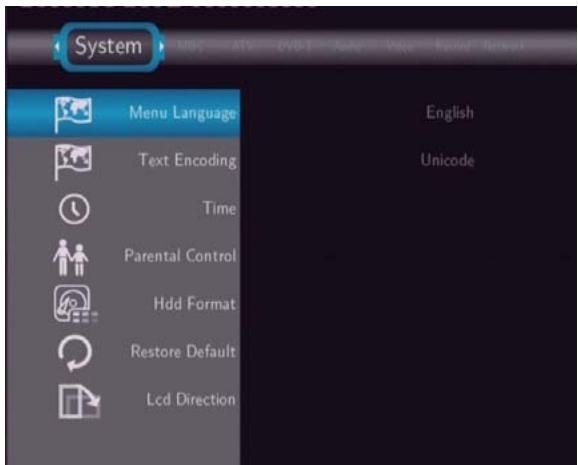
| Menu Language | Select to choose the OSD (On Screen Display) language. | |
| System Menu Language Text Encoding Time Parental Control Hdd Format Restore Default LCD Direction English Espritol Français Deutsch Italienano Nederlandis Pyccknui | ||
| Press the up / down button to select the language. Press the enter button to confirm. | ||
| Text Encoding | Select to set text encoding. | |
| Press the up / down button to select from Unicode, Chinese GBK, BIG5, and etc. Press the enter button to confirm. | ||
| Time | Select to set the system time. | |
| Press the up / down button to select from Manual and Auto (via TV). Press the enter button to confirm. | ||
| Press the left / right button to select each field and the up / down button to adjust each setting. Press the enter button to confirm. | ||
Parental Control
Select to set the TV parental control options.
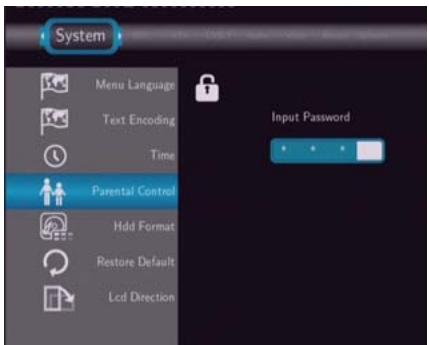
A password will be needed for the modification. The default one is '0000'. Press the numerical buttons to input, and the enter button to confirm.
Lock System
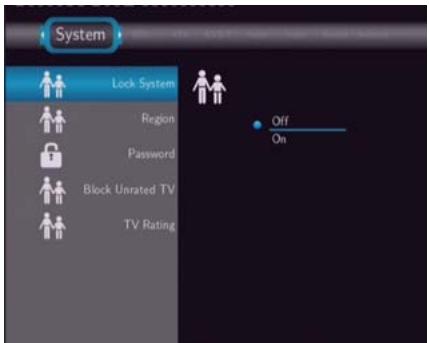
Press the up / down button to turn on or off the parental system. Press the enter button to confirm.
Region
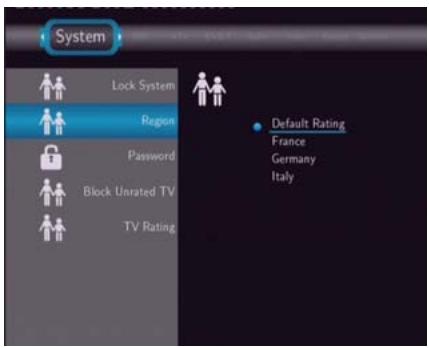
Press the up / down button to select the region. Press the enter button to confirm.
Password
HDD Format
Select to format the HDD.
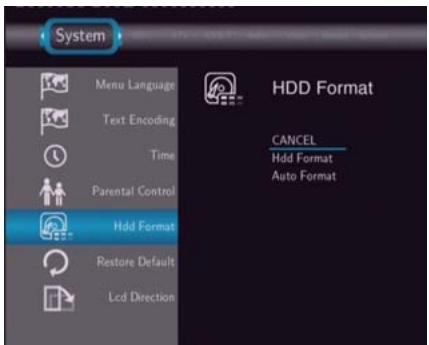
Press the up / down button to select HDD Format. Press the enter button to confirm.
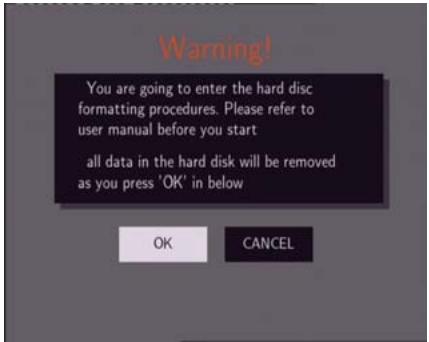
Press the left / right button to select OK. Press the enter button to confirm.
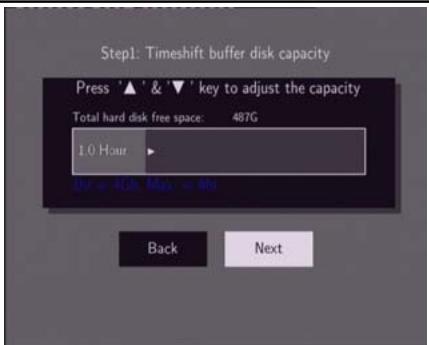
Press the up / down button to adjust the capacity of time shift buffer. Press the left / right button to select Next, and the enter button to confirm.
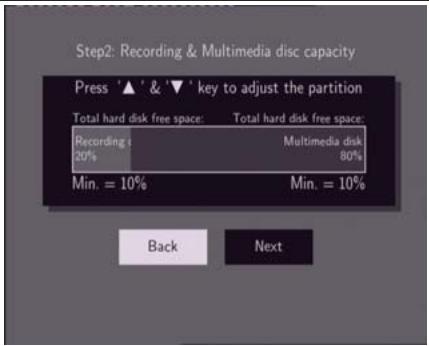
| Restore Default | Select to restore factory defaults. |
| A confirmation message appears. Select OK and press the enter button to restore all settings to defaults. | |
| LCD Direction | Select to set the direction of the LCD screen on the front panel. |
| Press the up / down button to select from Horizontal, Vertical, and Auto Detect. Press the enter button to confirm. |
7.8 Miscellaneous
Press the left / right button on the remote control to select the MISC tab from the menu.
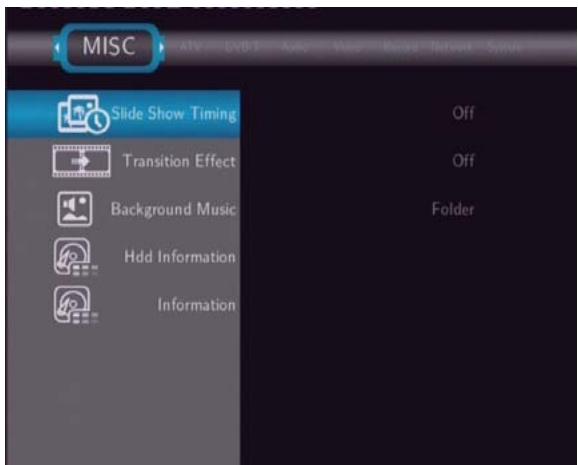
Slide Show Timing
Select to set the interval time for photo slide show.
| Press the up / down button to select. Press the enter button to confirm. | |
| Transition Effect | Select to set the transition effect for photo slide show. |
| Press the up / down button to select. Press the enter button to confirm. | |
| Background Music | Select to set the background music options while view pictures. |
| Press the up / down button to select from off, Folder, and All. Press the enter button to confirm. | |
| HDD Information | Select to view the HDD capacities. |
| The capacities of the recording, time shift and multimedia partitions are listed here. Press the enter button to confirm. | |
| Information | Select to view the system information. |
| The version of the firmware, BIOS, and the MAC Address, etc. are listed here. Press the enter button to confirm. |
8. Browser Menu
The Browser menu allows you to browse and play music, photo and movie files stored on a HDD, an external USB device, and Network. To enter the menu, select the Browser icon from the main interface.
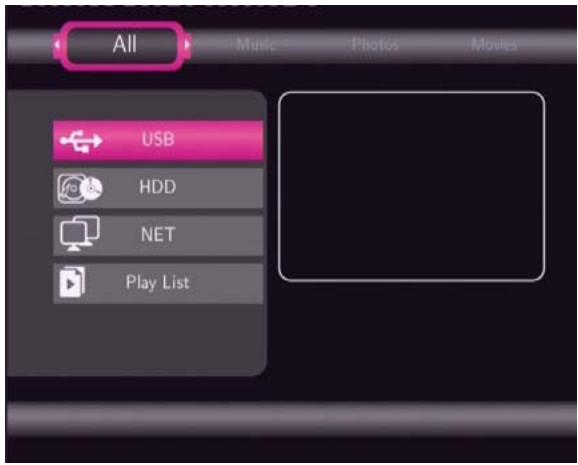
Press the up / down button to select the device on which the media is stored. Choose from HDD, USB, NET, and press the enter button.
When data on HDD, USB device is connected or connect the system to Network, you can also browse photos, listen to music, and watch movies.
8.1 Browsing All
Use the left / right button on the remote control to select the All tab.
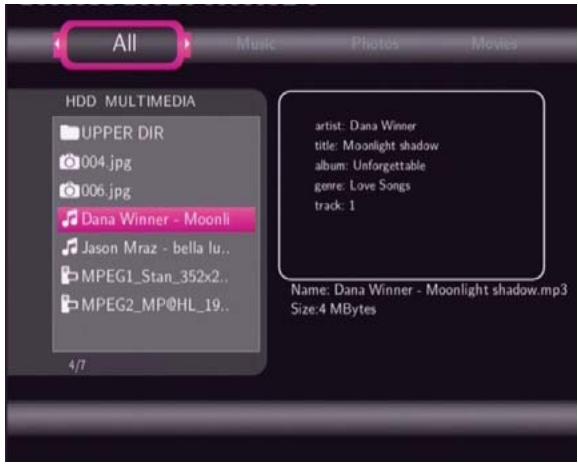
All directories and supported contents will be displayed. Press the up / down button to select the directory or file you wish to browse, and press the enter button to confirm.
8.2 Browsing Music
Use the left / right button on the remote control to select the Music tab.
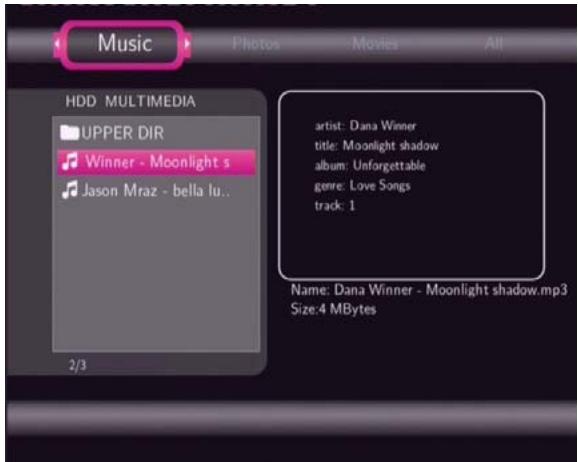
All directories and supported audio files in current directory will be displayed. Press the up / down button to select the file you want to play and press the enter button.
8.3 Browsing Photos
Use the left / right button on the remote control to select the Photos tab.
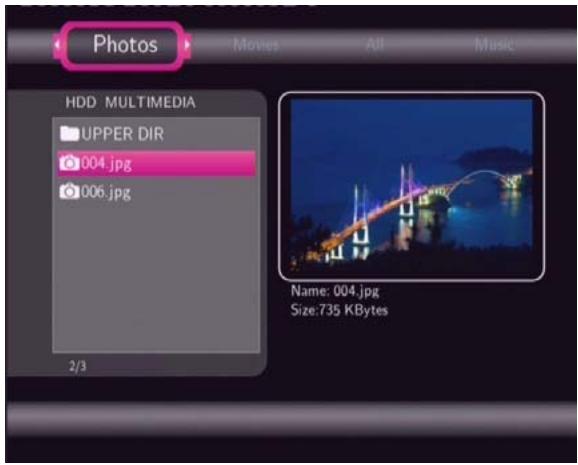
All directories and supported image files in current directory will be displayed. Press the up / down button to select the photo you want to view and press the enter button. The photo will be displayed full screen.
Note:
- When the photo is displayed in full screen mode, the slide show starts automatically.
- While listening to music files, you can browse the photos at the same time.
While browsing a photo, you can press the left / right button to rotate a photo in any angle. Besides rotating a photo, you can press the zoom button to zoom in/out that photo. Three zoom levels are available.
8.4 Browsing Movies
Use the left / right button on the remote control to select the Movies tab.
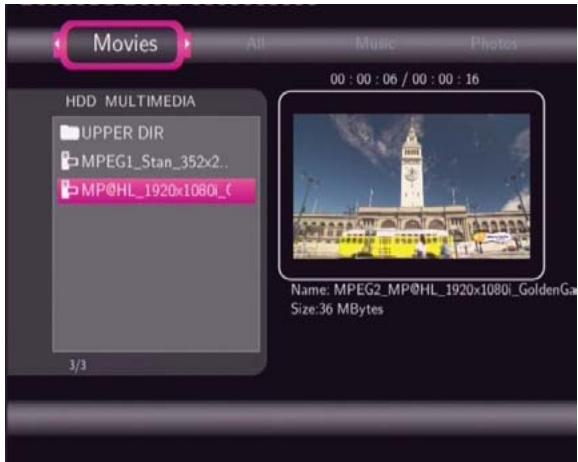
All directories and supported video files in current directory will be displayed. Press the up / down button to select the movie you want to view and press the enter button. The movie will be played in full screen mode.
This browsing movies function supports DAT, VOB, IFO, MPG, AVI, and TS file formats.
While browsing a movie in full screen mode, you can press the zoom button to zoom in/out the image. Four zoom levels are available.
8.5 Browsing via Network
You can streaming playback the multimedia files shared on the local area network (Ethernet or WLAN).
Before viewing the following, please make sure that you have read 7.6 Changing Network Settings and made the right settings.
When selecting NET in the Browser menu, there are two ways to locate the multimedia files shared on your local network. One way is to browse through workgroup; the other way is to browse through 'My_Shortcuts'.
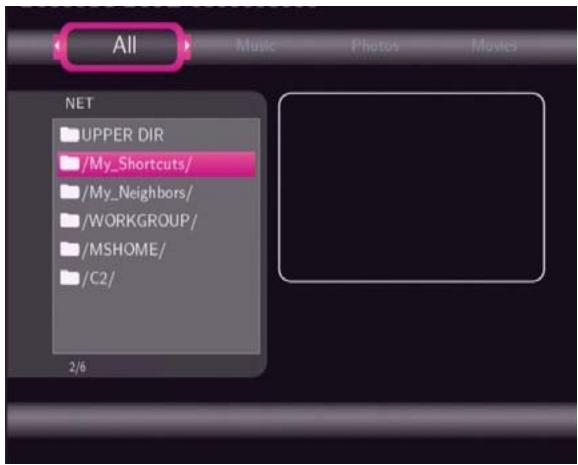
8.5.1 Browsing through Workgroup
You can choose the workgroup which your PC belongs to from the workgroup list, find your PC name, and press the enter button to confirm.
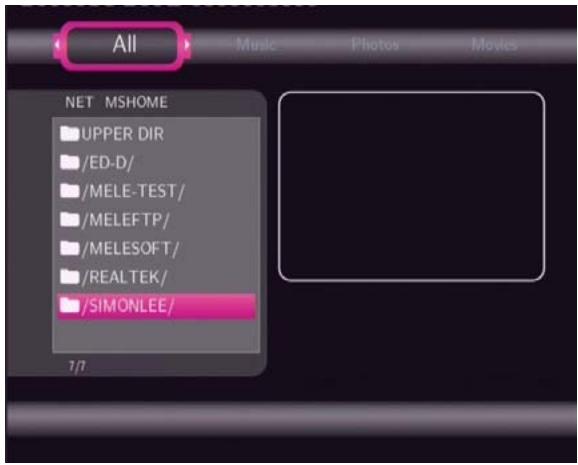
Then select the shared multimedia file that you want to browse.
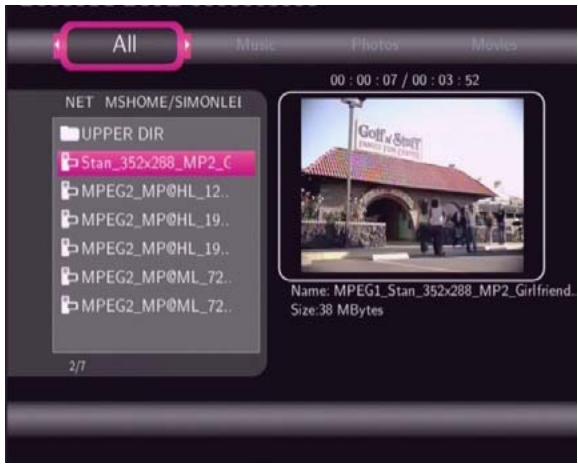
Note:
- While browsing high definition video files (resolution up to 720p / 1080i / 1080p) via Ethernet or WLAN, the video might be buffering. It is normal due to the limit of network speed or signal strength.
- Due to different network conditions, sometimes the workgroup might not be accessed or shown in the list. And then you need to use 'My_Sharcuts' to browse shared files.
8.5.2 Browsing through 'My_Shortcuts'
You can also set 'Specific File Server IP' and access it from 'My_Shortcuts' in the menu.
Press the menu button and a tools menu appears.
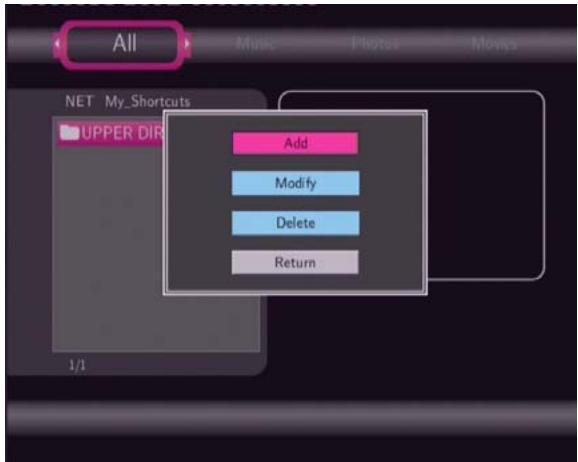
Network Browser
Select to set Net User ID, Net Password, and Specific File Server IP, which enables to browse files on NET through 'My_Shortcuts'.
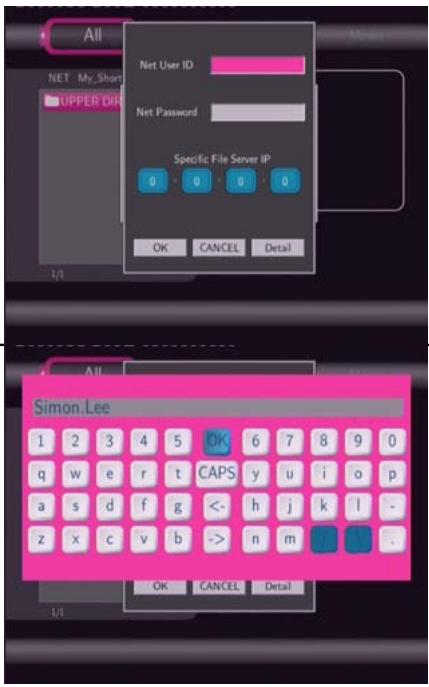
Select Net User ID and the entry screen will appear.
Press the navigation buttons to select letters and numbers. Select CAPS to toggle between uppercase and lowercase letters. Press <-to delete a letter. Press -> to insert a space. Press the enter button to input each letter or number. Select OK and press the enter button to confirm all changes.
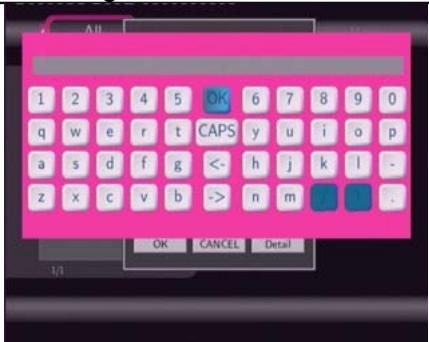
Select Net Password and the entry screen will appear. See above.
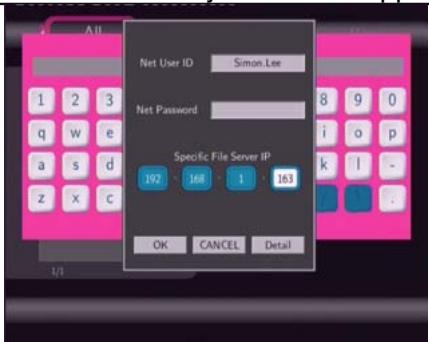
Select Specific File Server IP, and use navigational and numeric buttons to enter IP address.
Select the shortcut you added and press the enter button to confirm.
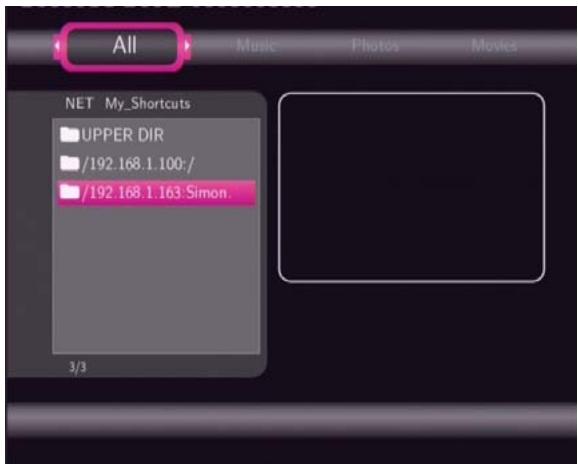
Then select the shared multimedia file that you want to browse.
8.6 Renaming / Deleting Files
When navigating in the browser menu, you can press the menu button to activate a popup menu where you can rename and delete files or folders.
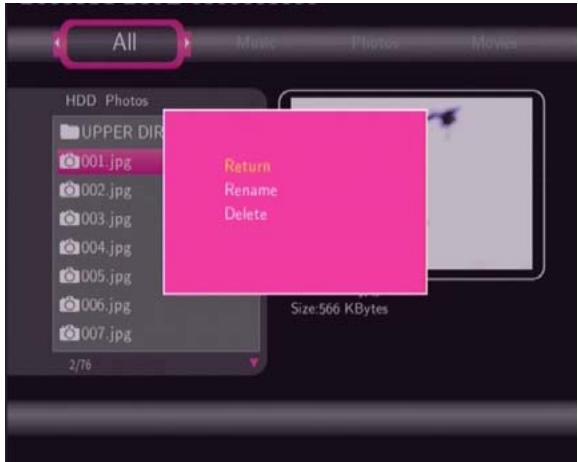
Press the up / down button to select from Return, Rename, and Delete. And press the enter button to confirm.
8.6.1 Renaming Files
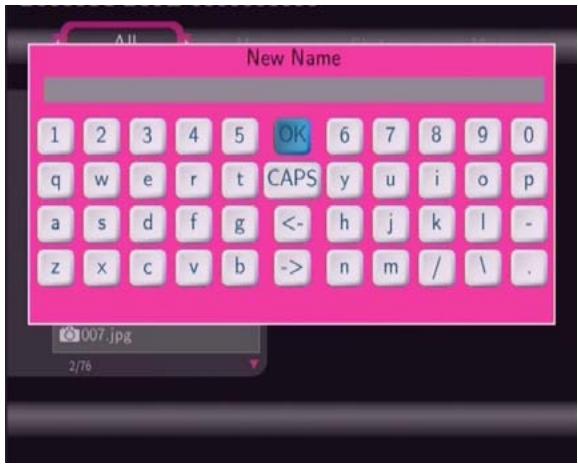
Press the navigation buttons to select letters and numbers. Select CAPS to toggle between uppercase and lowercase letters. Press to delete a letter. Press to insert a space. Press the enter button to input each letter or number. Select OK and press the enter button to confirm all changes.
8.6.2 Deleting Files
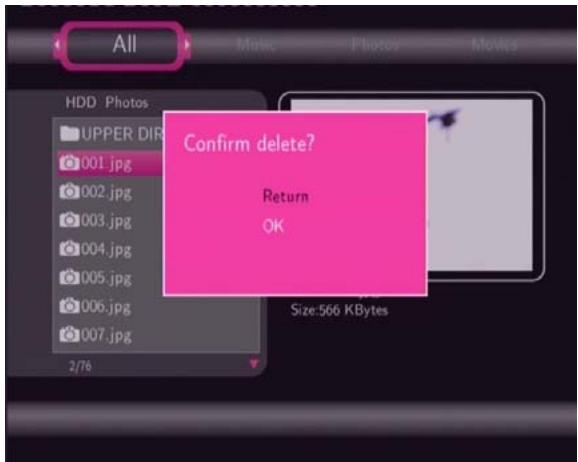
Press the up / down button to select OK. And press the enter button to confirm the deleting operation. Or select Return to cancel.
Note: Partitions of NTFS file system format on the hard disc drive might be read-only.
8.7 Managing the Playlist
This player supports the playlist function, which allows you to add your favorite content to the playlist, and enjoy them at any time.
8.7.1 Adding files to the playlist
Select the favorite file you wish to add, press the red button on the bottom of the remote control, and the file will be ticked. Press the green button on the bottom of the remote control to confirm, and then an on-screen message 'Add selects to list' will be shown. Multiple
selections are allowed. See photo below.
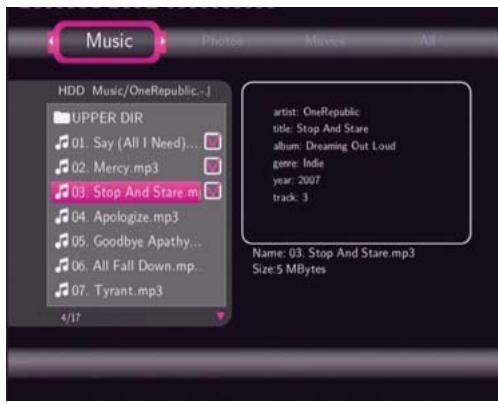
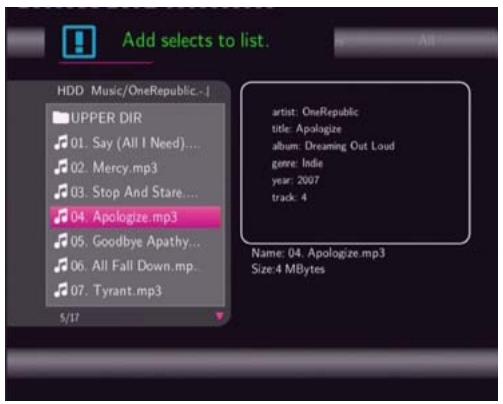
8.7.2 Browsing the playlist
Press the up / down button to select Play List in the browser menu. And press the enter button to confirm. Then you will enter the playlist.
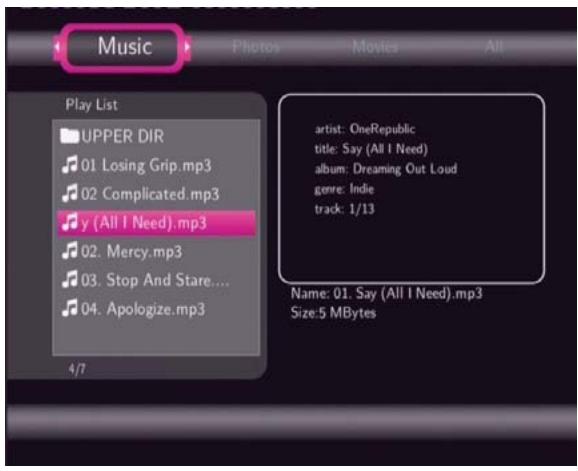
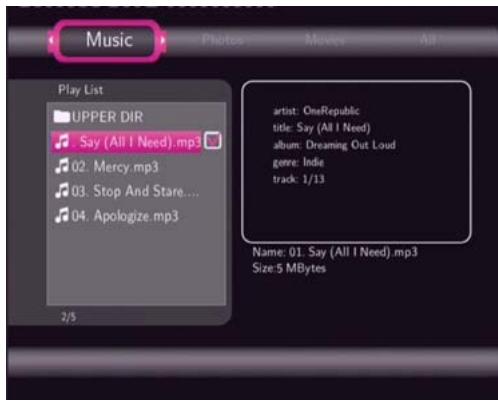
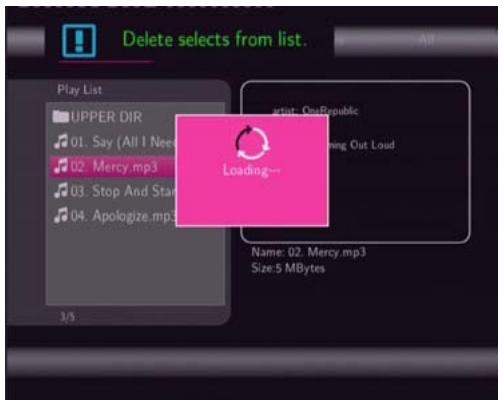
If you wish to delete a file from the playlist, press the red button to select, and then press the green button to confirm.
9. Media Library
Owning to a powerful search engine, the library menu allows you to search and browse multimedia files stored on the internal HDD in most easy ways. To enter this menu, select the Library icon on the main interface.
9.1 Music Library
Use the left / right button on the remote control to select the Music tab.
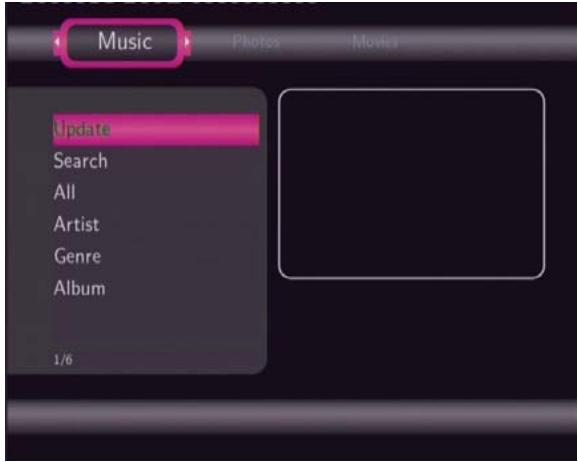
Press the up / down button to select from Update, Search, All, Artist, Genre, and Album. And press the enter button to confirm.
| Update | Select to update and synchronize all the music stored on the internal HDD to the library. |
| Music Update Search All Artist Genre Album Leading-- 1/8 | |
| Search | Select to search for music files by their names. |
| Music Search avril 1 2 3 4 5 OK 6 7 8 9 0 q w e r t CAPS y u i o p a s d f g <- h j k l -z x c v b -> n m | |
| Use the navigational buttons to select, and press the enter button to confirm. Select OK and press the enter button, and then the files you desired will be displayed on the screen. | |
| All | Select to list all the music files in the library. |
| Music 1: Losing Grip.mp3 01-avril_lavigne-girlfriend 01-craig_david-hotstuff_02_Complicated.mp3 02-avril_lavigne-i_can_do 02-craig_david-6_of_1_th 03_Sk8er_Boi.mp3 1/3N press the up / down button to select the artist, and press the enter button to confirm. | |
| Artist | Select to search for music files by artist. |
| Music 1: Losing Grip James Blunt Leona Lewis OneRepublic Craig David Nickelback 4/25 Press the up / down button to select the artist, and press the enter button to confirm. | |
| Genre | Select to search for music files by genre. |
| Music 1: Losing Grip Blues Classic Rock Rock R&B Alternative Other 1/8 Press the up / down button to select the genre, and press the enter button to confirm. | |
| Album | Select to search for music files by album. |
| Press the up / down button to select the album, and press the enter button to confirm. | |
| Quick-Search | You can also press the right button to turn on a Quick-Search bar while browsing music files in the library. |
| Press the up / down button to select characters on the Quick-Search bar, and press the enter button to confirm. And then music files with name starting with the specific characters will be displayed onto the top. Press the left button to delete characters, and press the back button to close the Quick-Search bar. |
9.2 Photo Library
Use the left / right button on the remote control to select the Photos tab.
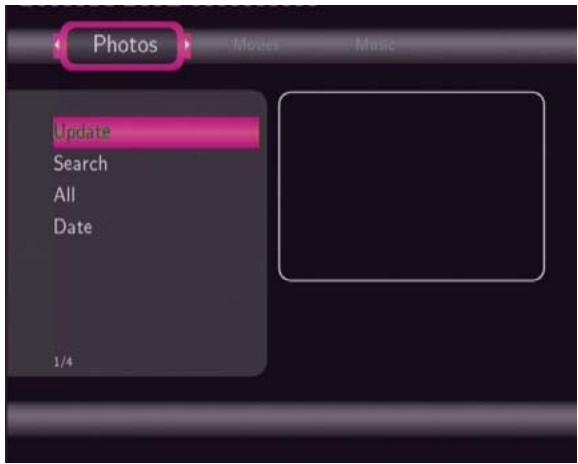
Press the up / down button to select from Update, Search, All, and Date. And press the enter button to confirm.
| Update | Select to update and synchronize all the photos stored on the internal HDD to the library. |
| Music Update Search All Artist Genre Album 1/8 | |
| Search | Select to search for photos by their names. |
| Search 2008 1 2 3 4 5 OK 6 7 8 9 0 q w e r t CAPS y u i o p a s d f g <- h j k l -z x c v b >> n m | | | . | |
| Use the navigational buttons to select, and press the enter button to confirm. Select OK and press the enter button, and then the files you desired will be displayed on the screen. | |
| All | Select to list all the photos in the library. |
| Select to search for photos by date. | |
| Press the up / down button to select the date, and press the enter button to confirm. | |
| Quick-Search | You can also press the right button to turn on a Quick-Search bar while previewing photos in the library. |
| Press the up / down button to select characters on the Quick-Search |
bar, and press the enter button to confirm. And then photos with name starting with the specific characters will be displayed onto the top. Press the left button to delete characters, and press the back button to close the Quick-Search bar.
9.3 Movie Library
Use the left / right button on the remote control to select the Movies tab.
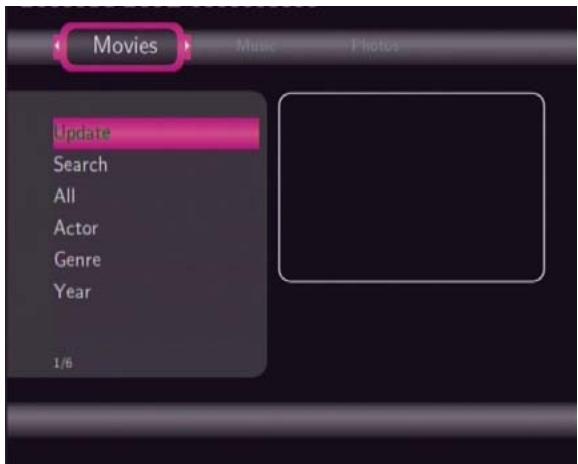
Press the up / down button to select from Update, Search, All, Actor, Genre, and Year. And press the enter button to confirm.
| Update | Select to update and synchronize all the movies stored on the internal HDD to the library. |
| Movies Cont-1A.avi Cont-1B:avi Cont-1C:avi Cont-1D:avi Cont-1E:avi Cont-1F:avi Cont-1G:avi 1/H | |
| Search | Select to search for movies by their names. |
| Search shrek 1 2 3 4 5 OK 6 7 8 9 0 q we r t CAPS y u i o p a s d f g < h j k l -z x c v b >> n m | | | | |
| Use the navigational buttons to select, and press the enter button to confirm. Select OK and press the enter button, and then the files you desired will be displayed on the screen. | |
| All | Select to list all the movies in the library. Movies CONT-1A.avi CONT-1B.avi CONT-1C.avi CONT-1D.avi CONT-1E.avi CONT-1F.avi CONT-1G.avi l/4 |
| Actor | Select to search for movies by actor. Movies CONT-1A.avi Jeff Bridges Naomi Watts Johnny Depp Mike Myers Edward Norton Amy Adams l/1 |
| Press the up / down button to select the actor, and press the enter button to confirm. | |
| Genre | Select to search for movies by genre. |
| Movies Movie大片 Cartoon Adventure Comic Sci-Fi Love Action 1/7 Press the up / down button to select the genre, and press the enter button to confirm. | |
| Year | Select to search for movies by year. |
| Movies Movie大片 Cartoon Adventure Comic Sci-Fi Love Action 1/6 Press the up / down button to select the year, and press the enter button to confirm. | |
| Quick-Search | You can also press the right button to turn on a Quick-Search bar while previewing movies in the library. |
| Movies Movie大片 Iron Man CD1 Iron Man CD2 King Kong Trailer Leona Lewis - [A Moment] Leona Lewis - [Better In T] Leona Lewis - [Bleeding L] Leona Lewis - [Bleeding Inc]20/74 |
Press the up / down button to select characters on the Quick-Search bar, and press the enter button to confirm. And then movies with name starting with the specific characters will be displayed onto the top. Press the left button to delete characters, and press the back button to close the Quick-Search bar.
Note:
In order to use the search function more efficiently, you are encouraged to use the following rules to name the movies stored on the internal HDD.
Syntax: [Name][Actor][Genre][Year].extension
Examples: [Enchanted.CD1][Amy Adams][Love][2007].avi, [The Dark Knight.CD1][Christian Bale][Action][2008].avi, etc.
10. File Copy Menu
Press the copy button on the remote control to enter the File Copy menu, which allows you to copy files between HDD, USB devices and Network.
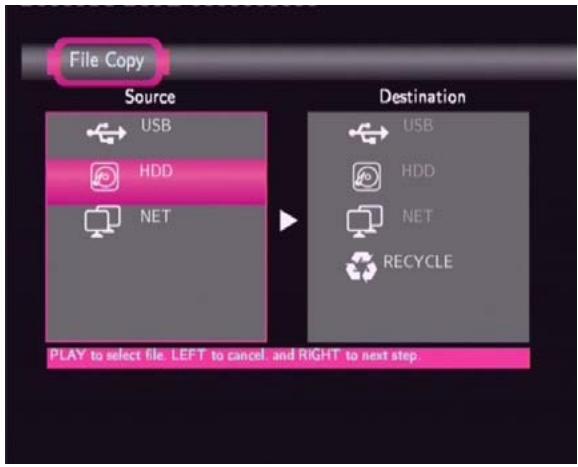
Step 1: Select the source device and destination device.
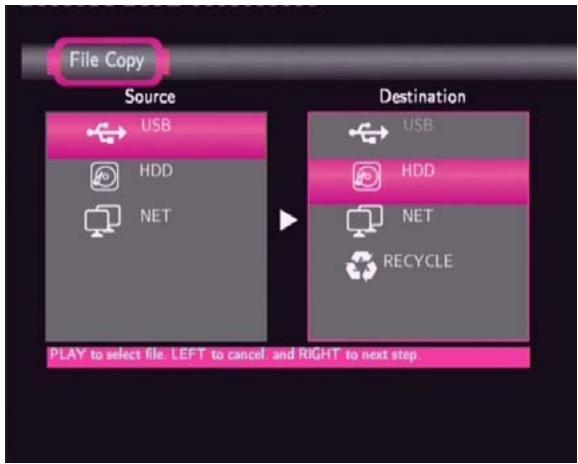
Press the up / down button to select device. Press the left button to cancel, and the right button for next step.
Step 2: Select the source files you want to copy.
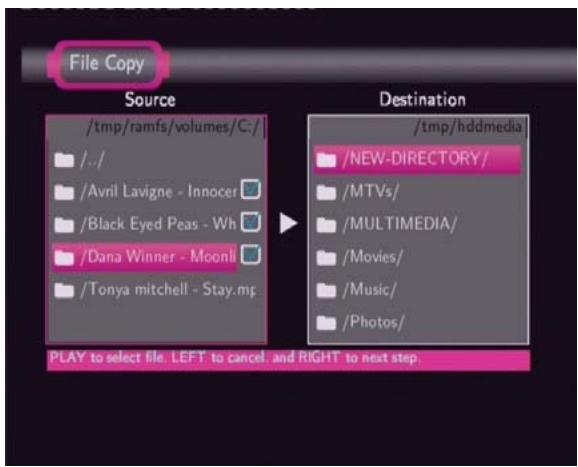
Press the play button to select files, the left button to cancel, and the right button to next step.
Step 3: Select the destination folder to store the above files.
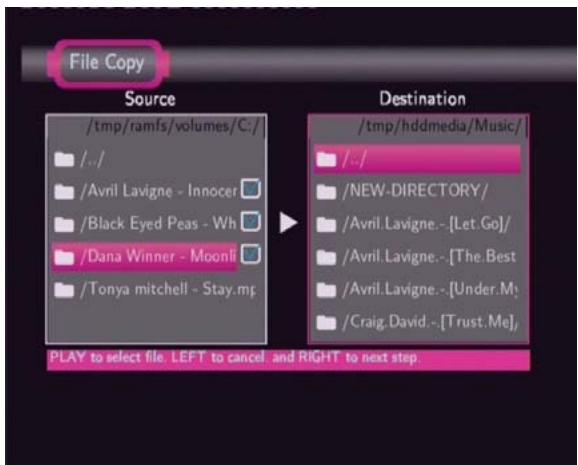
Press the up / down button to select folder. Press the left button to cancel, and the right button for next step.
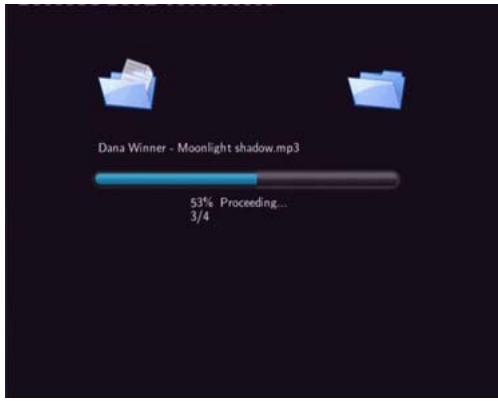
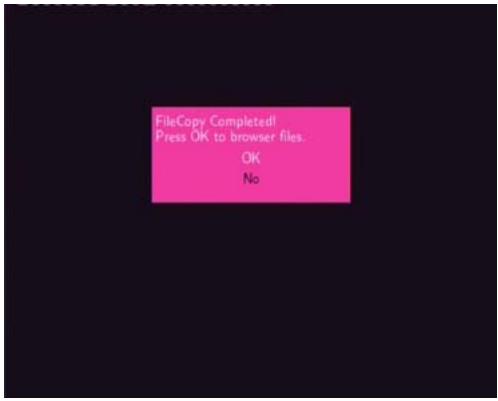
Step 4: Proceed to copy selected files.
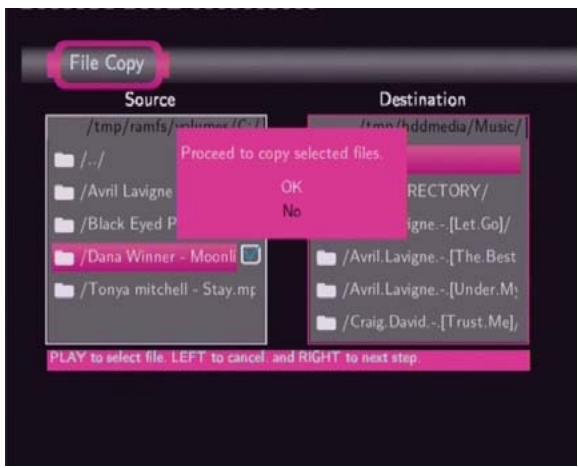
Press the up / down button to select OK, press the enter button to confirm. And the copy will start.
11. NAS Function
This player can be used as a NAS (Network-Attached Storage) device. It can be attached to the home network via either Ethernet or WLAN. This feature allows homes to store and retrieve large amounts of data more affordably than ever before.
When the network connection is done correctly and ready for use, please activate the NAS mode in the setup menu in advance (refer to 7.6 Changing Network Settings for more details), and then type: \NAS or \IP Address in the Run window (click Run in the start menu) or the address bar of Internet Explorer on your PC (For example, if the IP address of the player is 192.168.0.9, please type: \192.168.0.9 or \NAS), and click OK or press the Enter button on the keyboard.
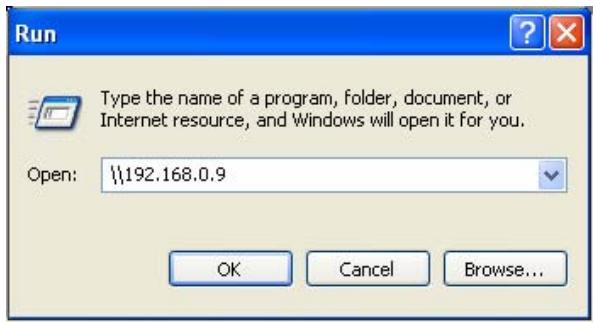
Then you can view, and edit the files stored on the hard disk installed on the player. In this way, you can also playback and copy files via network between your PC and the player.
Note:
- Partitions of NTFS file system format on the hard disc drive might be read-only;
- Please turn on the NAS mode in the setup menu before using this function
12. Listening to Internet Radio
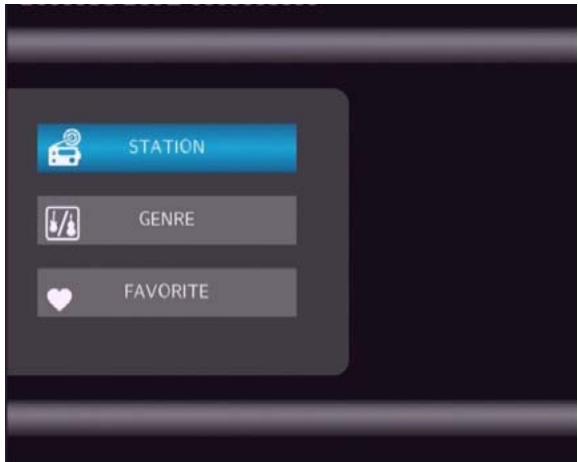
This player integrates the SHOUTcast free Internet radio function. Select the Internet Radio icon on the main interface to enter this menu.
Note:
- Make sure the player is connected properly to a LAN or WLAN with Internet access, please refer to '7.6 Changing Network Settings' for more details;
- When you enter the Internet Radio menu at the first time, it will take several seconds to download data from the Internet, please be patient to wait;
- For more about SHOUTcast, please refer to the website: www.shoutcast.com
12.1 Station List Menu
Press the up / down button to select STATION, and press the enter button to confirm.
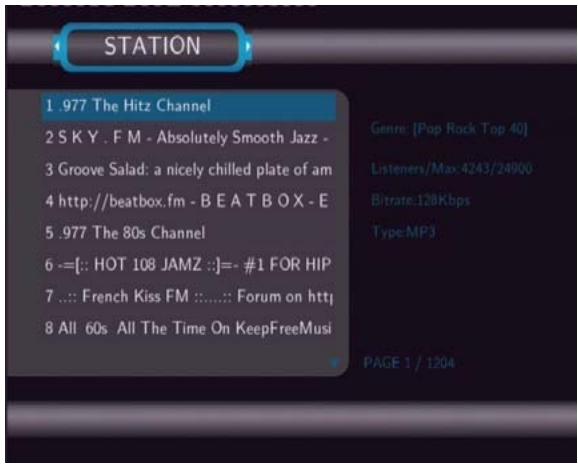
Press the up / down button to select the station you wish to visit from the list. Press the enter button to confirm. You can also press the prev / next button to page up and down.
When a station is selected, then you will enter the CHANNEL List menu. Press the up / down button to select the channel you wish to listen to.
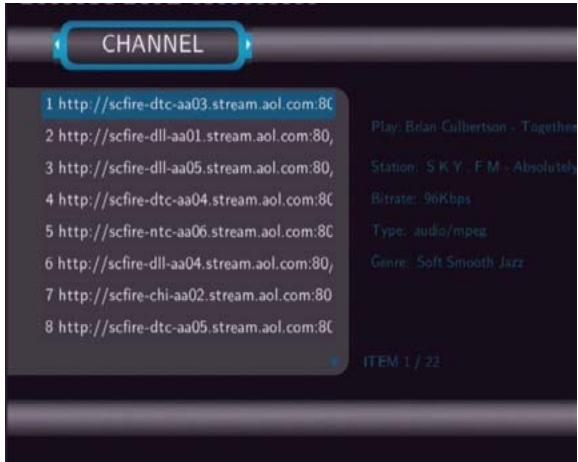
Press the enter button or the play button to start listening to the channel. And press the stop button or the back button to stop.
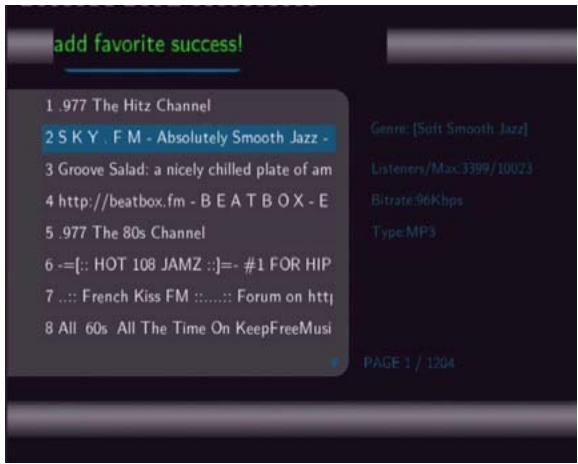
When a station is highlighted, you can press the menu button to add it to the favorite.
12.2 Genre List Menu
Press the up / down button to select GENRE, and press the enter button to confirm.
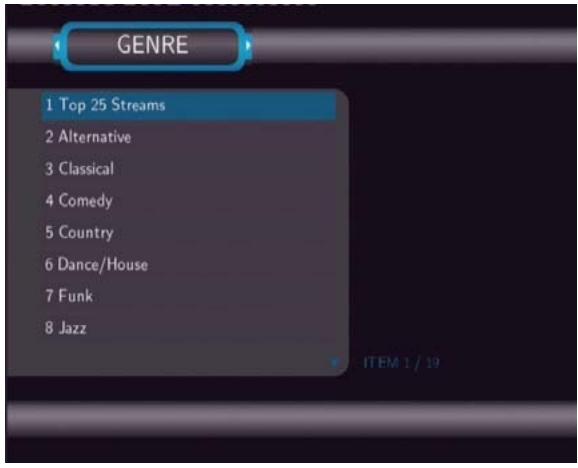
Press the up / down button to select the genre you wish to visit from the list. Press the enter button to confirm. You can also press the prev / next button to page up and down. In this way, you can search your favorite stations via genre.
12.3 My Favorite Station
Press the up / down button to select FAVORITE, and press the enter button to confirm.
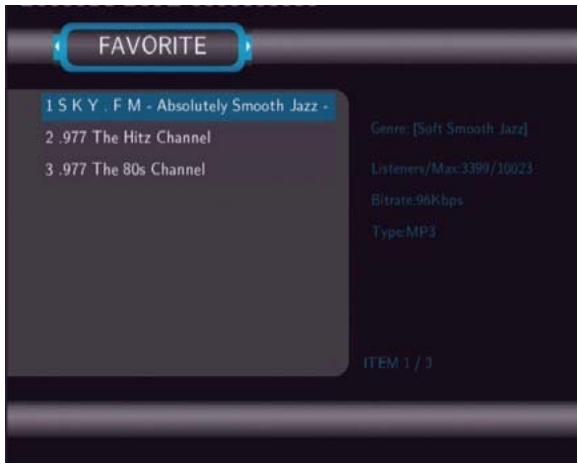
All the favorite stations you added from the station list menu can be found and managed here.
When a station is highlighted, you can press the menu button to delete it from the favorite.
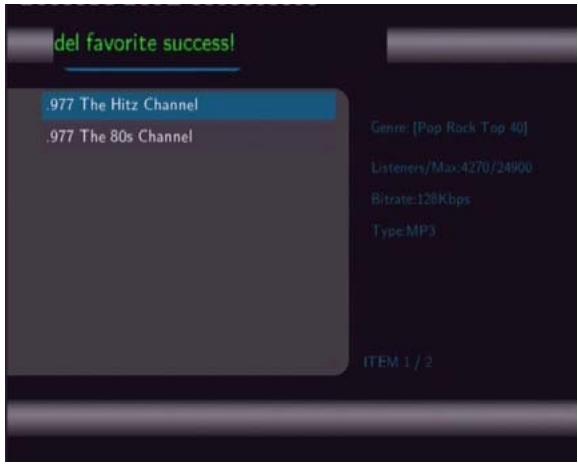
Note: You can have a maximum of 20 favorite stations in the list.
13. Upgrading the Firmware
The firmware is the operating system (OS) installed on the device. Firmware upgrades can bring new features, improvements and bug fixes.
To check whether you have the latest version of firmware:
- Select MISC in the Setup menu;
- The firmware version number is displayed behind SW Version;
- Compare it with the latest firmware released.
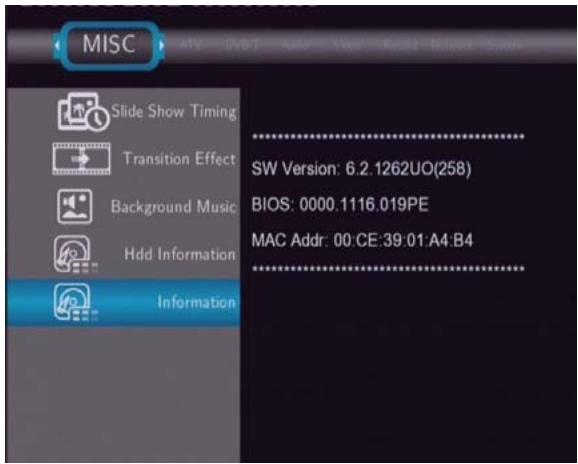
Download the latest firmware from our official website.
Step 1: Prepare the USB Pen Drive
You will need a USB Pen Drive for firmware upgrade. Copy the files for upgrade to the root directory of your USB Pen Drive.

aryl.ttf
TrueType Font file
140 KB

crc32.txt
Text Document
1 KB

install,O flash,Img
IMG File
14,157 KB

install a
File
2,653 KB

logo pal.bmp
720 × 576
Bitmap Image

video firmware.bin
BIN File
1,217 KB
Step 2: Connect the USB Pen Drive
Plug the USB Pen Drive into one of the USB HOST ports of the player.
Step 3: Hold the power / standby button
Press and hold the power / standby button on the front panel, and do not loosen.
Step 4: Connect the power cable
Plug the power cable into the DC IN jack, wait for about 3 seconds or more, and then loosen your finger on the power / standby button;
Firmware installation will start in about 30 seconds. The LED indicators on the front panel will be enlightened and flashing during installation. If it is connected to a TV set, a blue install page will appear on the TV screen.
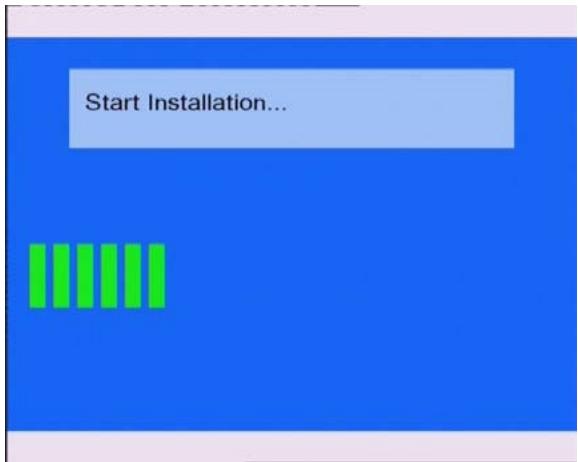
Please wait for several minutes, the installation will be completed, the LED indicators will go off, and the player will be powered off automatically. Then you can press the power / standby button to turn on the player and enjoy.
Note:
Do not turn off the power during installation;
The USB Pen Drive is not allowed to be unplugged during installation.
14. Appendixes
14.1 Specifications
USB SUPPORTED:
USB HDD
- Other USB Mass Storage Devices
USB 2.0 Interface
CONTENT FORMATS SUPPORTED:
- DAT/VOB/IFO/MPG/AVI/MPEG-2 TS
MP3/OGG/WMA - Compression rate: between 32 kbps and 320 kbps
JPEG/BMP
VIDEO CODECS SURPORTED:
MPEG-1/MPEG-2
MPEG-4 ASP: XviD
AUDIO CODECS SURPORTED:
- MP2/MP3 /OGG Vorbis/WMA Standard (DRM, Pro & Advanced Profile not supported)/PCM
SUBTITLE FORMS SURPORTED:
- SRT, SMI, SSA, IDX/SUB, SUB
RECORDABLE DEVICES SUPPORTED:
Built in HDD
USB HDD
Mode 80GB HDD 120GB HDD 160GB HDD
HQ 16hrs 24hrs 33hrs
SP 32hrs 48hrs 66hrs
LP 48hrs 72hrs 99hrs
EP 64hrs 96hrs 132hrs
SLP 96hrs 144hrs 198hrs
HQ/SP/LP/EP/SLP mode: MPEG-2 MP@ML
HQ/SP/LP/EP/SLP mode: MP2 2-chanel
AD Converter 24-bit/96kHZ
Signal-Noise (1kHz) ≥ 95dB
Dynamic Range ≥90dB
(1kHZ)
Channel ≥95dB
Separation
Total Harmonic
Distortion (1kHz) ≤ -85dB
NETWORK FEATURE
Ethernet 10/100Mbps Auto-Negotiation
WLAN IEEE 802.11b/g, up to 54Mbps (supported by the optional WLAN USB Adapter)
ANALOG TV SYSTEM
Frequency Range 44.25MHz~863.25MHz (VHF I/III / UHF)
Video PAL B/G, D/K, I, SECAM L and L'
Audio Stereo, Mono
75 Ohm (VHF / UHF) TV Analog Antenna or cable
DIGITAL TERRESTRIAL TV SYSTEM
Frequency Range 44.25MHz~863.25MHz (VHF I/III / UHF)
COFDM 2K FFT or 8K FFT COFDM demodulator
Fully DVB-T compliant : ETS 300-744
Code Rate 1/2, 2/3, 3/4, 5/6, and 7/8
Guard Interval 1/4, 1/8, 1/16, 1/32
Constellation QPSK 16QAM, 64 QAM
Bandwidth 6,7 or 8MHz
Digital TV Tuner 75 Ohm (VHF / UHF) TV Digital Antenna
GENERAL
Power Supply AC 100~240V 50~60Hz
Power Approx. 35 W
Consumption
Operating +5^ to +35^ (+36^ to +95^)
Temperature
Operating Humidity 5 % to 80 % RH
Hard Disk 3.5" SATA HDD
Dimensions 211.5x57x152mm
(W/H/D)
Net Weight Approx 1.2 kg
Note: The specifications and design of this product are subject to change without notice.
14.2 Frequently Asked Questions
Question 1. My computer does not recognize my player.
Answer:
(1) Make sure the player is powered on. If it is off, the computer will not be able to find the player;
(2) Make sure the player is connected to computer. (Refer to 1.4.1 for connecting player to computer);
(3) When using Windows 98SE, install the USB driver first. After installation, restart the computer. Then reconnect the player to the computer. (Refer to 1.4.1 for connecting player to computer);
(4) If you installed the Windows 98SE driver over your Windows® XP, 2000, or ME edition, problems might occur;
(5) It is not recommend using the USB ports in the front of your computer, try to use the USB ports in the rear, because the USB ports in the front are often from non-powered hubs.
Question 2. When I try to disconnect the USB device, I keep on getting "The device 'Generic volume' cannot be stopped right now. Try stopping the device again later." message, what should I do?
Answer:
Close any program that might be accessing data on the player, including Windows® Explorer. If it does not work, close all programs and wait for another 20 seconds, then try the green arrow icon again. If it still does not work, you should shut down the player and disconnect the USB cable.
Question 3. I find new file names and folder names that I never created before or they have strange gibberish names.
Answer:
Most likely, the player's file allocation table (FAT) has been corrupted. This might be due to the player shutting down (due to low battery power) while reading or writing to your computer by the USB connection. Windows and Macintosh often write extra files to the hard disk such as finder.def or System volume info. These are normal and will not do any harm to the player.
Question 4. I used my player to transfer files back and forth between different computers. Will defragmenting the player hard disk do any harm to it?
Answer:
Defragmenting the player hard disk may be useful after having transferred many files to and from the player. It is never harmful to use the defragment on the player. Make sure no other programs are running while using the Windows® defragment utility. Make sure you have connected the player with the external power adapter during this procedure.
Question 5. My files have disappeared from the player.
Answer:
Make sure that you browse your files via the correct Browser mode which means correct filtered views such as Photos, Music, or Movies.
Question 6. Why do some supported photo formats, cannot be shown in the photo function?
Answer:
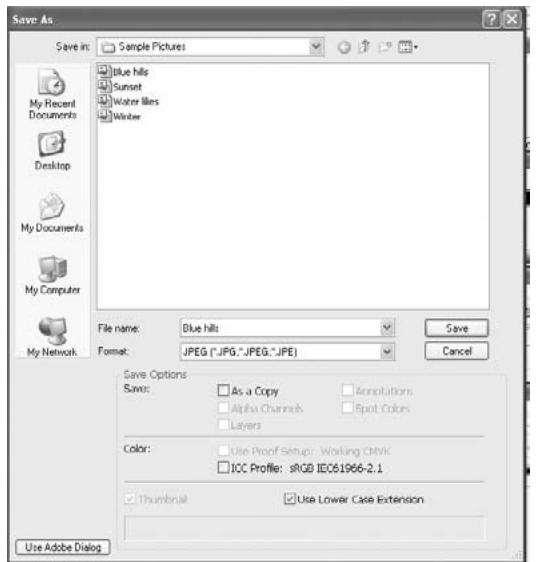
In the JPEG format there are different modes. The player doesn't support all the modes. So you have to change your photo format first as follow:
(1) Use Photoshop to open the photo;
(2) Choose "File" then "save as" from the menu, as the picture on the left hand side shows, select the picture format as JPEG, input the file name and click the "save" icon;
(3) After click on the "save" icon, a new window will appear as the picture on the right hand side shows, select "Baseline (standard)" or "Baseline optimized";
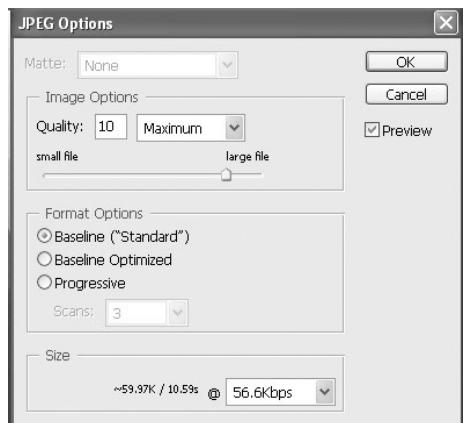
(4) Click the "OK" icon.
Question 7. During power on, why does the TV will have a short flashing, blue screen or screenshot?
Answer:
This is normal, when the system initializes, it will setup the corresponding parameters so it can output the correct video signal to the TV, during the initializing time, the TV will receive incorrect signals or the signals will not be stable and will cause the TV screen to flash, some TV's will treat this as no signal, and will display a blue screen or screenshot.
Question 8. Why when I switch to Y/Pb/Pr 480P, 576P, 720P, 1080I, does the TV screen display an unwatchable picture?
Answer:
Please check if your TV supports Y/Pb/Pr 480P, 576P, 720P, 1080I output, if your TV does not support, please use the A/V signal display instead, press the TV SYSYEM button on the remote control, then switch the TV's video input to NTSC or PAL.
Question 9. Why is there no sound on movie or music playback when using Y/Pb/Pr component output?
Answer:
Y/Pb/Pr output is a video output only, and does not include sound signals, when using Y/Pb/Pr output, please plug the A/V OUT or the S/PDIF jack to output sound.
Question10. Why couldn't the player find the hard disc?
Answer:
Make sure the firmware is installed correctly, and no system partitions on the HDD were deleted. If hard disc failure occurs, please backup your data and reinstall the firmware.
Question11. Some functions like recording, time shift etc. do not work. What should I do?
Answer:
If you find some functions do not work properly on the player, please change system settings to the default (Refer to 6.6 for changing system settings).
Question12. While playing movies in the multimedia partition, buttons like PREV, NEXT, A-B, etc. sometimes could not be used.
Answer:
The above functions are designed for recorded video titles and IFO (DVD) files only.
14.3 Copyrights and Trademarks
Copyrights
All rights reserved. No part of this manual may be reproduced, stored in a retrieval system, or transmitted in any form or by any means, electronic, mechanical, photocopying, recording or otherwise, without the prior written permission from the copyright holder. According to copyright law, no recorded data may be used for purposes other than personal enjoyment without permission from the copyright holder.
Trademarks
Microsoft and Windows are registered trademarks of Microsoft Corporation.
All other trademarks are property of their respective holders.
14.4 Warranty
What your warranty does not cover:
-Acts of nature, such as fire, static discharge.
-Damage from unauthorized repair, alteration or accident.
-Damage from misuse or neglect.
-A unit that has been modified or incorporated into other products or is used for institutional or other commercial purposes.
- Loss of customer's software, firmware, information, or memory data.
-Improper handling or installation.
For complete information regarding EMTEC Movie Cube warranty and customer support please visit our website: www.emtec-international.com